
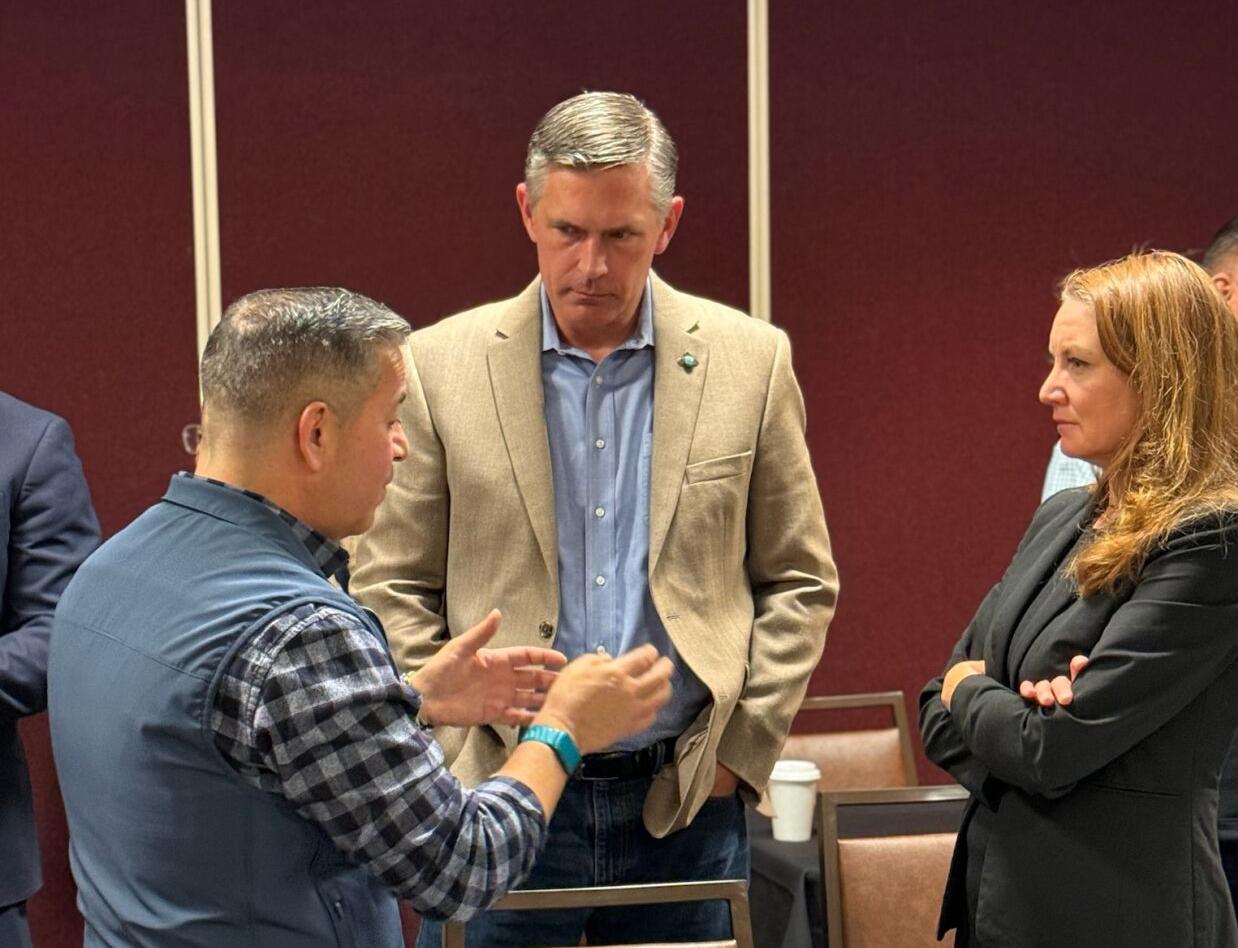
U.S. Sen. Ben Ray Luján wrote a letter to the editor published on the Washington Post’s website Sunday calling for changes to the 1872 Mining Law.
The New Mexico Democrat pushed back on some points made by Wyoming Republican Sen. Cynthia Lummis in an April op-ed and criticized President Donald Trump’s policies promoting mining on public lands.
“I know what bad mining policy looks like,” Luján wrote. “The Trump administration reversed protections for New Mexico’s Upper Pecos watershed, leaving 165,000 acres open to hardrock mining over the unanimous objection of communities and tribal nations still cleaning up a mine that closed in 1939. The administration is now fast-tracking uranium exploration in the Chama watershed, which supplies drinking water across northern New Mexico and still bears the scars of its uranium mining history.”
“The real permitting problem is not too much process but an outdated system that breeds conflict and mistrust,” Luján continued, going on to plug the Mining Waste, Fraud, and Abuse Prevention Act he introduced a year ago. The bill, whose co-sponsors include his New Mexico colleague Sen. Martin Heinrich, has yet to move forward in Congress.
“Lummis wants certainty for industry,” Luján wrote. “New Mexicans want certainty that their water will be drinkable. Both are possible — but not without an honest diagnosis.”
In other news, U.S. Rep. Gabe Vasquez wrote to Defense Secretary Pete Hegseth late last week asking him to issue an order barring service members and department employees from placing national security-related bets on prediction market platforms. The letter, which Vasquez penned with a handful of other lawmakers, “comes in response to troubling reports of service members illegally using prediction markets to leverage insider government information to place bets and profit on classified U.S. military action in places like Iran and Venezuela,” Vasquez’s office wrote in a news release.
“The pattern of likely government insiders or military personnel using classified, military information to place bets on these contacts risks the lives of our servicemembers and compromises operations,” the lawmakers wrote. “Indeed, the perverse incentives inherent in conflict-related contracts could prompt leaders to prioritize personal profit over mission success.”
By Nathan Brown
Article Source: Santa Fe New Mexican