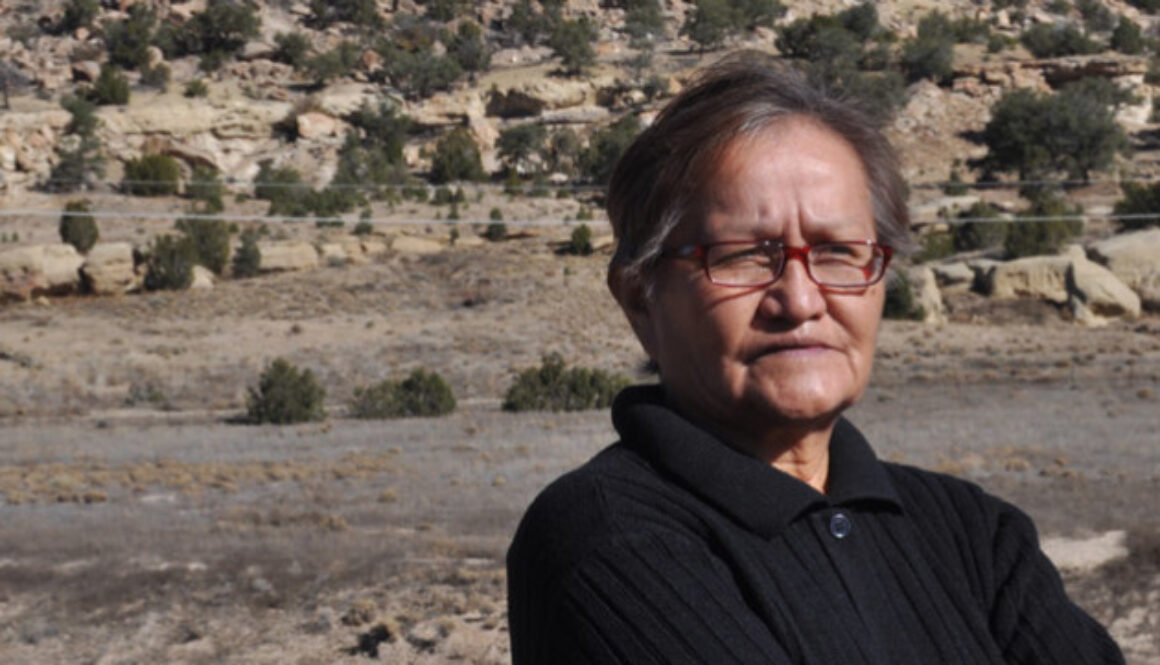
“It is past time for the U.S. and New Mexico governments
to take our concerns seriously and
take action to guarantee our rights to safe water.”
Teracita Keyanna, Red Water Pond Road Community Association
WASHINGTON, D.C. — On Monday, April 4, 2016 the Inter-American Commission on Human Rights will hold a hearing on Human Rights and Access to Water in the United States. (Get schedule) The hearing is open to the public.
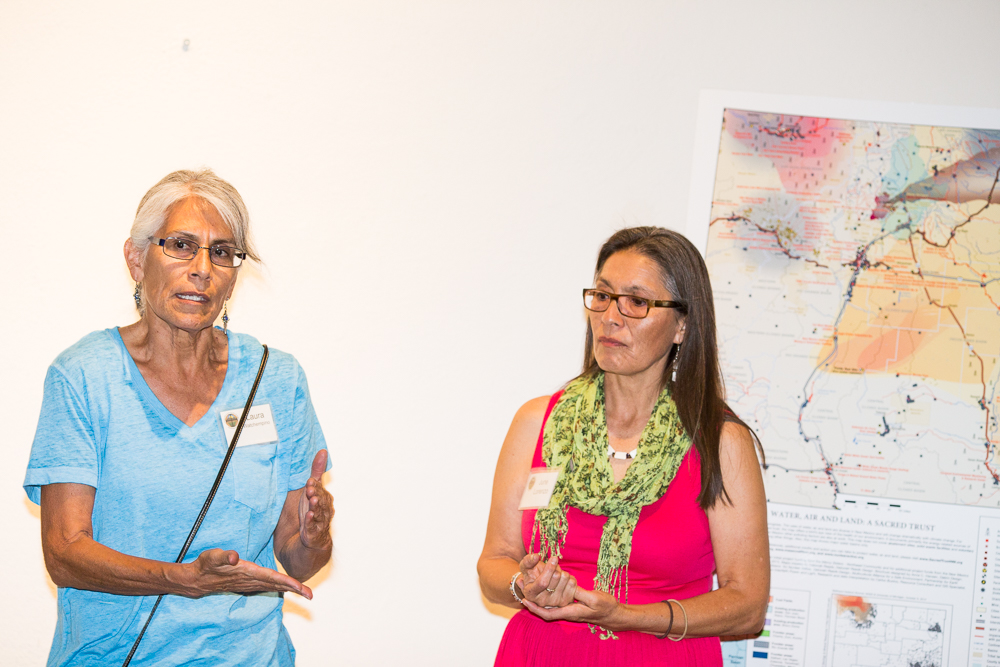
At the invitation of the Commission, members of the Red Water Pond Road Community Association (RWP) will attend to testify. RWP Community member, Teracita Keyanna, will speak before the Commission on how her community has been denied equal access to quality drinking water for decades. The hearing will be live streamed here: http://www.oas.org/en/iachr/sessions/default.asp
The RWP is a grassroots organization of Diné families who have experienced and lived with the impacts of uranium mining and milling in the Churchrock, NM area since the 1960s. The Red Water Pond Road community is located between two abandoned uranium mines: the Northeast Churchrock Mine and the Quivira Mine. The Red Water Pond Road community is also less than a mile north of an inactive uranium mill. (See Google map) The Red Water Pond Road Community Association is a member of the New Mexico based Multicultural Alliance for a Safe Environment.
“We were never told of the dangers and hazards of these mines. Now I understand that my own family has suffered health impacts from our exposures to uranium contaminated dust and water,” said Teracita Keyanna. “It is past time for the U.S. and New Mexico governments to take our concerns seriously and take action to guarantee our rights to safe water.”
“Equal access to clean drinking water is such a fundamental moral value, most Americans take it for granted” says Eric Jantz, NMELC staff attorney. “But rather than working to guarantee clean water for everyone, the federal and New Mexico government has prioritized allowing industry to pollute pristine aquifers. This has to change.”
WHO:
Red Water Pond Road Community Association
New Mexico Environmental Law Center
WHAT:
Inter-American Commission on Human Rights hearing on the Right to Water
Follow the conversation at #WaterIsAHumanRight on Twitter.
INTERVIEWS ARE AVAILABLE UPON REQUEST
CONTACTS:
Eric Jantz, Staff Attorney, New Mexico Environmental Law Center (505) 750-3027 ejantz@nmelc.org
Teracita Keyanna, Red Water Pond Road Community Association (505) 728-7389
The New Mexico Environmental Law Center is a not-for-profit law firm dedicated to protecting the communities and environment of New Mexico through legal representation, policy advocacy, and public education. It was founded in 1987.
The Multicultural Alliance for a Safe Environment is rooted in the experiences of uranium-impacted communities of the southwestern U.S. We are communities working to restore and protect the natural and cultural environment through respectfully promoting intercultural engagement among communities and institutions for the benefit of all life and future generations.
The U.S. Human Rights Network is a coalition comprised of over 125 grassroots, national groups and individuals working on the human right to water and sanitation throughout the United States. The groups have come together in response to the fact that communities of color, low-income communities, and indigenous peoples across the U.S. lack equal access to safe, affordable, adequate water and sanitation. The coalition works to elevate solutions from the people and communities most directly affected, facilitate joint organizing and advocacy, and share knowledge to create change.
The cost of drinking water and sewer services in the United States, rising on average at twice the rate of inflation, is giving birth to a new civil rights movement, one based on access to water and sanitation for the poor.
Stirred by the thousands of Detroiters whose water service was shut off in 2014, local groups have coalesced into a national campaign for affordable water. They seek new policies at the local, state, and federal levels to help the country’s poorest residents maintain basic services during an era of financial tumult.
The movement’s origins are local, led by grassroots activists primarily in the Rust Belt and New England. Dozens more communities around the nation also are involved that are stung by poverty, government mismanagement, or old infrastructure like the Massachusetts Global Action’s Color of Water Project, in Boston; the People’s Water Board, in Detroit; the Michigan Welfare Rights Organization; the Environmental Justice Coalition for Water, in California.
Ability to Pay Going Down
The movement has earned important victories, both in advertising its cause and in changing practices.
On October 23, 2015, the Inter-American Commission on Human Rights, an organization that helps set the human rights agenda in the Americas, held its first-ever hearing on access to water and sanitation in the United States. Representatives from the Color of Water Project, Michigan Welfare Rights Organization, the Baltimore Right to Housing Alliance, the Multicultural Alliance for a Safe Environment, and other groups described unsanitary conditions and people cut off from water.
“We have families, especially children, living and playing among raw sewage,” Catherine Flowers, the executive director of the Alabama Center for Rural Enterprise, and the leading advocate for sanitation in rural Alabama. “This is the starkest form of inequality in this nation, and a blatant violation of the human right to clean water and sanitation.”
The IACHR was intrigued. The commission granted a request for a second hearing, which will be held on April 4.
“It’s on the agenda because the IACHR wants to hear more about it,” Maria Isabel Rivero, IACHR spokeswoman, told Circle of Blue.
DISCHARGE PERMIT FOR CHURCH ROCK URANIUM MINE TERMINATED
“We live everyday with environmental legacy from past uranium mining.
The termination of this permit means we won’t face new mining anytime soon.”
Larry J. King, ENDAUM
SANTA FE, NM — A state groundwater discharge permit for a controversial uranium mine proposed near Church Rock, NM has been officially terminated. Mining cannot begin at the site without a valid permit.
DP-558, originally issued in 1989, allowed Hydro Resources, Inc. (now Uranium Resources, Inc.) to discharge contaminated water into the aquifer as part of its mining operation. The permit expired in 1996. Although the New Mexico Environment Department (NMED) received a renewal application from Hydro Resources in 1996, the agency did not act on the application until the summer of 2015 – 19 years after the company submitted its renewal application.
Despite strong opposition from the Eastern Navajo Diné Against Uranium Mining (ENDAUM), the Multicultural Alliance for a Safe Environment (MASE) and the Navajo Nation Department of Justice, NMED renewed the permit in October 2015.
In November, the renewal was appealed to the State Water Quality Control Commission by the New Mexico Environmental Law Center (NMELC) on behalf of ENDAUM. Shortly after the appeal was filed, NMED Secretary Ryan Flynn terminated the permit, stating that contamination levels allowed in the 1989 permit would no longer meet New Mexico’s uranium groundwater standard. (The standard was reduced in 2004 from 5,000 micrograms/liter to 30 micrograms/liter.)
“This is a major victory for ENDAUM, in our long pursuit in protecting our precious groundwater,” said Larry J. King. “We live everyday with environmental legacy from past uranium mining. The termination of this permit means we won’t face new mining anytime soon.”
“After NMED spent years fighting to preserve this application, we are glad that the agency has finally agreed that this permit is no longer valid,” says NMELC Staff Attorney Eric Jantz, who challenged the permit in state district court in 2010 and worked with ENDAUM to submit comments on the application in August 2015.
Prior to the renewal of the permit, the Navajo Nation Department of Justice also stated in comments that NMED should deny the permit renewal. Its letter states that the Westwater Canyon Aquifer, where Hydro Resources, Inc. (now Uranium Resources, Inc.) proposes to mine “is seen as a promising source of drinking water in the future due to its high quality.”
ENDAUM, MASE and NMELC will continue to challenge any new uranium mining that would impair the quality of groundwater or degrade air quality for Diné communities.
INTERVIEWS ARE AVAILABLE UPON REQUEST
The Eastern Navajo Diné Against Uranium Mining is a grassroots group opposing construction of the Crownpoint Uranium Project, a uranium in situ leach (ISL) mining operation proposed for two sites in Churchrock Chapter and two in Crownpoint Chapter of the Navajo Nation. http://swuraniumimpacts.org/eastern-navajo-dine-against-uranium-mining/
The New Mexico Environmental Law Center is a not-for-profit law firm dedicated to protecting the communities and environment of New Mexico through legal representation, policy advocacy, and public education. It was founded in 1987, and has represented ENDAUM since 1996. www.nmelc.org
The Multicultural Alliance for a Safe Environment is rooted in the experiences of uranium-impacted communities of the southwestern U.S. We are communities working to restore and protect the natural and cultural environment through respectfully promoting intercultural engagement among communities and institutions for the benefit of all life and future generations. www.swuraniumimpacts.org
March 15, 2016 — On August 5, 2015, a team contracted by the US Environmental Protection Agency (EPA) to investigate a leak at the Gold King mine in Silverton, Colorado, accidentally breached the mine, sending three million gallons of toxic wastewater in a foul yellow surge down the Animas River…..
…. Soon after the spill, water from the Gold King joined the San Juan River and flowed into the Navajo Nation. “This disaster will last for decades,” said Navajo Nation President Russell Begaye. “This is unacceptable. The damages to our people will be long-term and the Navajo Nation will not settle for pennies.”1 Many Navajo living along the river have lost crops and livestock. They are furious about yet another case of environmental damage of their lands and what they see as a delayed and insufficient response.
The state of New Mexico is offering residents kits to test for the presence of radon in their homes for $7.95.
Radon is an odorless and invisible gas that can increase the risk of lung cancer, especially among people who smoke. The only way of know if it is seeping into your home is by testing.
Local hardware stores offer kits for under $25, but people can order the low-cost kits by going to the Department of Health’s Environmental Public Health Tracking Program at https://nmtracking.org.
A news release from the state Department of Health says radon testing is easiest and most effective in cooler months, when house are closed up to keep the heat inside.
If a test shows evidence of radon, people should call the Environment Department at 505-476-8606 to get information about how to reduce and minimize their exposure.
Radon is the second-leading cause of lung cancer in the U.S. after smoking and the leading cause of lung cancer among nonsmokers, according to the news release.
Seventy years ago last August, a B-29 bomber named the Enola Gay released its 4,000kg load over the Japanese city of Hiroshima, the sudden loss of weight jolting the US aircraft violently upwards as the pilot banked hard to escape the imminent blast.
“My God, what have we done,” wrote Enola Gay co-pilot Robert Lewis, recalling in his journal the morning of August 6, 1945, when he witnessed the atomic bomb, code-named Little Boy, successfully detonate 1,800 feet above Hiroshima. The blast killed tens of thousands of people instantly and levelled more than half of the city.
Two weeks earlier, the first atomic device, called the “Gadget”, had been successfully tested at the Trinity Site in the white sands desert of New Mexico.
“The hills were bathed in a brilliant light, as if somebody had turned the sun on with a switch,” said Otto Frisch, a physicist for the Manhattan Project, who designed the first theoretical mechanism for the detonation of an atomic bomb, in his account of the early morning blast described by Eric Schlosser in his book Command And Control.
The light from the explosion was seen up to 320 kilometres away in the town of Gallup, and the shockwave – covered up by the US government as an ammunition dump explosion – was felt as far as Albuquerque.
GRANTS – Four federal agencies have identified a total of more than 100,000 contaminated and potentially contaminated sites on lands they manage. But that is not even a complete inventory, in particular, for abandoned mines, a General Accountability Office official said Friday.
For Western states still reeling from the toxic Gold King Mine spill in Colorado, the specter of thousands of leaking abandoned mines and many more unaccounted for, is not reassuring.
The federal government owns over 700 million acres of land – primarily managed by the Departments of Agriculture, the Interior, Defense, and Energy. Some of the land is contaminated with hazardous waste from prior uses and poses environmental or human health risks, J. Alfredo Gomez, GAO’s director of Natural Resources and Environment, told a subcommittee of the House Committee on Energy and Commerce.
In some cases, the agencies do not have sufficient staff to conduct a complete inventory of contaminated sites, Gomez said.
The four departments stated that they are allocating and spending millions of dollars annually on environmental cleanup. Estimated future costs of cleanup are in the hundreds of billions of dollars.
Forest Service numbers
GAO reported in January that the USDA Forest Service had not developed a complete, consistent, or usable inventory of abandoned mines and had no plans and procedures to do so because, according to Forest Service officials, they did not have the resources. Without a comprehensive inventory, USDA and the Forest Service will not have reasonable assurance they are prioritizing and addressing the sites that pose the greatest risk, GAO stated.
The Forest Service estimated there are from 27,000 to 39,000 abandoned mines on their lands – approximately 20 percent of which may pose some level of risk to human health or the environment. Such risks may include chemicals and explosives, acid mine drainage, and heavy metal contamination in mine waste rock.
In fiscal year 2013, USDA allocated over $22 million to environmental cleanup efforts and reported in its financial statements $176 million in environmental liabilities to address 100 sites.
BLM inventory
GAO also stated in its January report that the Interior had identified 4,722 sites with confirmed or likely contamination. These included 4,098 Bureau of Land Management sites that the agency reported had confirmed contamination or required further investigation to determine whether remediation was warranted. The majority of these sites were abandoned mines.
BLM also identified over 30,000 abandoned mines that were not yet assessed for contamination.That number may actually be larger, GAO said, because BLM had not yet identified all of the abandoned mines on the land it oversees. BLM estimated it will take decades to complete the inventory.
Additionally, GAO found that the Interior’s Bureau of Indian Affairs, Bureau of Reclamation, Fish and Wildlife Service and National Park Service also have sites with environmental contamination.
In FY 2013, the Interior allocated about $13 million for environmental cleanup efforts and reported $192 million in environmental liabilities in its financial statements to address 434 sites.
Department of Defense
Before federal environmental legislation was enacted in the 1970s and 1980s regulating the generation, storage, treatment and disposal of hazardous waste, Defense activities and industrial facilities contaminated millions of acres of soil and water on and near Defense properties.
In June 2014, the Department of Defense reported to Congress that it had 38,804 contaminated sites in its inventory, including Base Realignment and Closure locations such as Fort Wingate, as well as munition response sites that were known or suspected to contain unexploded ordnance and discarded military munitions.
GAO reported in July 2010 that Defense spent almost $30 billion from 1986 to 2008 across all environmental cleanup and restoration activities at its installations. In its fiscal year 2014 agency financial report, Defense reported $58.6 billion in total environmental liabilities.
Department of Energy
Seventy years of nuclear weapons production and energy research by the Department of Energy and its predecessor agencies generated large amounts of radioactive waste, spent nuclear fuel, excess plutonium and uranium, contaminated soil and groundwater, and thousands of contaminated facilities.
DOE’s Office of Environmental Management is responsible for one of the world’s largest environmental cleanup programs.
According to DOE’s FY 2016 congressional budget request, Environmental Management has completed cleanup activities at 91 sites in 30 states and Puerto Rico, and has remaining cleanup responsibilities at 16 contaminated sites in 11 states. DOE reported receiving an annual appropriation of almost $5.9 billion in fiscal year 2015 to support cleanup activities. In 2014, the agency estimated its total liability for environmental cleanup at almost $300 billion.
To talk to former uranium miners and their families is to talk about the dead and the dying. Brothers and sisters, coworkers and friends: a litany of names and diseases. Many were, as one worker put it, “ate up with cancer,” while others died from various lung and kidney diseases. When the former workers mention their own diseases, it’s clear, though unspoken, that they’re also dying. Some don’t wait for the disease to take them: “Poor guy says he don’t wanna be in a diaper,” says one worker of his brother-in-law, a former miner with lung disease who was facing hospice. “He got a gun and shot himself.”
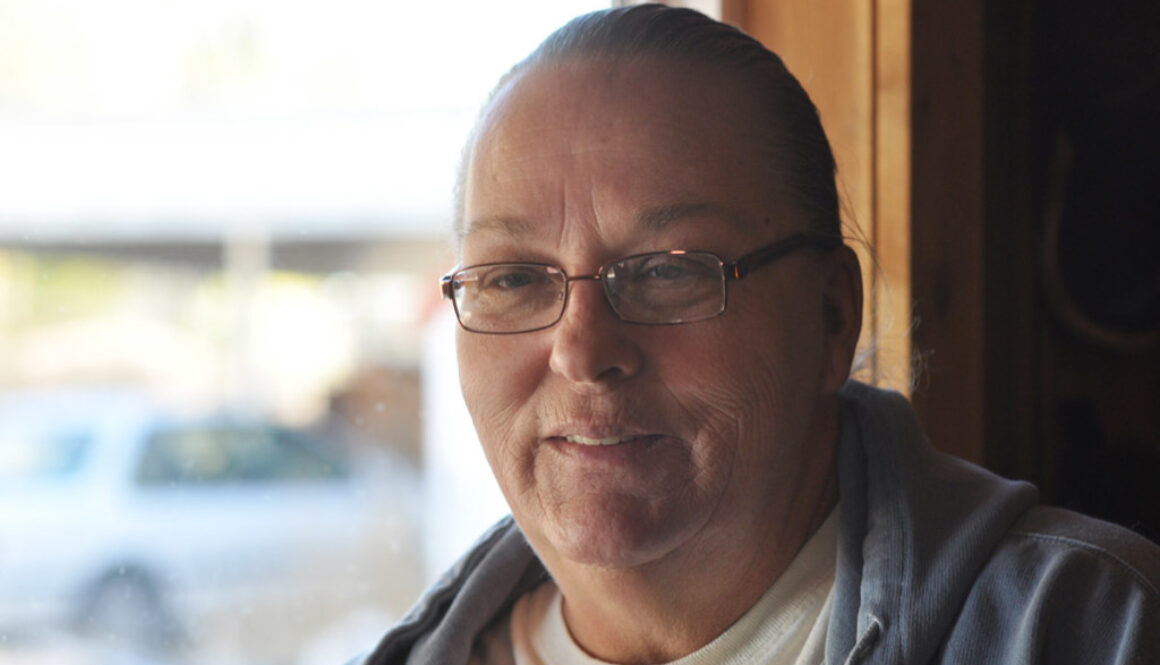
Women who worked in the mines and mills also bore the risk of reproductive disorders and babies with birth defects. “[Supervisors] told me … as long as I could do the job, there was no reason to worry about my baby,” says Linda Evers, 57. Both of her children had birth defects. Her daughter was born without hips.
Linda Evers, who worked in a uranium mill in the 1970s, says, “Every day, they told us we were doing our part for the Cold War effort.” (Photograph by Joseph Sorrentino)
I spent a week interviewing former uranium workers (those who worked in the mines and the mills and, sometimes, both) and their families in the towns of Grants and Church Rock, N.M.: ground zero for uranium mining from the mid-1950s until the early 1980s. Years, sometimes decades, after laboring in the mines and mills, workers exhibit diseases associated with uranium exposure. The federal government, under a program called the Radiation Exposure Compensation Act (RECA), has paid more than $750 million in restitution to uranium workers on nearly 8,000 claims. But in order to receive compensation, workers have to have been employed before 1972—the year the federal government stopped purchasing uranium for its nuclear arms build-up. The workers I spoke with are part of a group of thousands who worked in uranium mines or mills after December 31, 1971, and have diseases linked to uranium exposure, but, so far, cannot get compensation from RECA.
Spouses of former workers also suffer health effects, even though they may have never set foot in a mine or mill. The Post ’71 Uranium Workers Committee, an advocacy organization cofounded by Linda Evers, surveyed 421 wives of uranium workers and found that 40 percent reported miscarriages, stillbirths or children with birth defects. One vector of contamination may have been laundry brought home from the mines. Cipriano Lucero, 61, worked in the Anaconda mill, where uranium was processed into yellowcake, a toxic substance. “[His clothes] were stinky and yellow and no matter how much bleach, they would never come out, they were still yellow,” says his wife, Liz, adding, “I would wash his clothes with our clothes.”
Liz was diagnosed with tumors in her ovaries when she was 28 and had to have a hysterectomy. She says the doctor told her it was uranium-related. Liz and Cipriano cofounded the Post ’71 Uranium Workers Committee with Evers.
So who’s to blame?
Uranium mining has long been known to be dangerous work. As early as 1546, in Schneeberg, Germany, it was noted that large numbers of uranium miners were dying from lung disease. The first scientific report linking uranium mining and lung disease was published in Germany in 1879, and that disease was shown in 1913 to be lung cancer. More scientific articles in the 1930s and 1940s seemed to indicate that radon and “radon daughters,” byproducts of uranium decay, were the primary cause.
But, driven by the Cold War push for nuclear arms, uranium mining continued unchecked with “little attention… paid to the health of uranium miners,” according to a Department of Labor historian.
In 1950, an Irish-Navajo sheep herder named Paddy Martinez found a bright yellow rock of uranium ore near Haystack, N.M. That set off a mining boom in the Four Corners (where New Mexico, Arizona, Utah and Colorado meet), providing sorely needed jobs.
“[The men] wanted to provide for their families, and the [mining] companies came in and said, ‘Hey, you guys are gonna make good money, have good benefits,’ ” says Liz Lucero. When she and Cipriano first got married, in 1976, he was working in a gas station for $3.85/hour. He took a job at the Anaconda mill the next year in order to get benefits and more money; about, he figures, $6 an hour. “Had to,” he says. “Had to support our family.”
Companies also lured workers with patriotism. “Every day, they told us we were doing our part for the Cold War effort,” says Linda Evers. “They’d tell us, ‘We won the Cold War because of you guys.’”
As the boom took off, Grants declared itself “The Uranium Capital of the World.”
Workers like Evers say they didn’t understand the dangers of uranium exposure, in part because the diseases take years to manifest. “When I was working, no one had been getting sick,” says Evers.
During the 1960s, Navajos working in uranium mines, few of whom smoked cigarettes, started experiencing high rates of lung cancer. Advocates and workers pressured the federal government—the sole purchaser of uranium from 1948 until 1971—for remedies. In 1979, Sen. Ted Kennedy (D-Mass.) introduced the first bill to compensate uranium workers and others for diseases attributable to radiation exposure, but it wasn’t until 1990 that RECA became law. With RECA, the government recognized its responsibility for the harm done to uranium miners and apologized “on behalf of the nation.” A 2000 bill expanded RECA to cover uranium mill workers, ore transporters and above-ground miners. Workers with diseases such as lung cancer, pulmonary fibrosis and silicosis are eligible for $100,000 in restitution. But the act only covers workers who were employed before 1972.
The Four Corners mining boom continued, however, thanks to nuclear power. It didn’t slow until 1979, when a glut of uranium on the world market led to a steep price drop, and layoffs began. By 1989, the last conventional uranium mine in New Mexico had closed.
All of the dozen former workers interviewed for this article worked after 1971 and are therefore denied RECA benefits. Tommy Reed, who worked in the mines until 1983 and has a constant cough, as well as skin and lung problems, finds this untenable. “We did the same work, have the same diseases, but we’re not covered,” he says. “What’s the rationale behind that?”
According to Chris Shuey, who directs the Uranium Impact Assessment Study at the Southwest Research and Information Center in Albuquerque, the government reasoned its responsibility ended in 1971 when it stopped purchasing uranium. Many Congress members, he adds, believe the new standards on radiation exposure passed in 1969 protected uranium workers. Yet, post-1971 workers are still dying. Something didn’t work.
A failure to regulate
Health and safety protections for uranium workers were, for many years, spotty at best and negligent at worst. The Department of the Interior’s Bureau of Mines (BOM), established in 1910 to reduce accidents, had little regulatory authority and was also tasked with “mineral resource development.” State laws were piecemeal: In 1958, for example, New Mexico instituted a policy to “clear all areas” of mines that exceeded safe levels of radon, but “there was limited enforcement,” according to a 2002 National Institutes of Health paper by Doug Brugge and Rob Goble.
MSHA’s motto is “Protecting Miners’ Safety and Health Since 1978.” Former uranium workers interviewed—all of whom worked at mines and mills from the mid-1970s through 1982 or 1983— don’t believe it did a very good job.
Radon is “one of the most potent carcinogens known,” according to Dr. Gordon Edwards, president of the Canadian Coalition for Nuclear Responsibility. But during the 1970s, government regulations didn’t mandate regular federal inspections to measure radon levels at uranium mines. Neither MSHA nor the National Institute for Occupational Health and Safety (which inherited some of the BOM’s responsibilities) could provide In These Times with confirmation that the government conducted inspections for radon levels at that time. Companies were supposed to self-monitor, and if they detected high levels of radon, implement safety measures.
By 1981, MSHA was supposed to be checking radon levels at the mines annually. Several workers remember inspections, but told In These Times that when inspectors were coming, supervisors had workers barricade the unsafe areas. When the inspectors left, the barricades came down and the workers went back in. At mills, “[inspectors] never got out of the trucks,” says Evers. “Maybe they did, but I never saw them.”
One effective way to reduce exposure to radon is through ventilation. All underground mines are supposed to be well-ventilated, and according to 1973 guidelines, uranium mines specifically had to have “an adequate quantity of good-quality air” in working areas so as to keep radon levels below the threshold. But in a survey of 1,302 post-1971 workers conducted by the Post ’71 Uranium Workers Committee in 2009, only 14 percent said their work areas had adequate ventilation; 36 percent said no and almost half answered “sometimes.”
The ventilation guidelines didn’t extend to uranium mills, despite exposure hazards there as well. At mills, uranium ore is refined into yellowcake, which is 80 percent to 90 percent uranium oxide. When inhaled, it can become embedded in the lungs, increasing the risk of pulmonary fibrosis, which can be fatal. When ingested, it can damage the kidneys.
Cipriano Lucero worked in uranium mills from 1977 to 1982. He has pulmonary fibrosis, and one of his kidneys failed when he was 48, necessitating a transplant. He uses a continuous positive pressure airway machine at night and uses an oxygen tank during the day. Asked whether there was proper ventilation in the mills where he worked, Lucero simply replies, “Not really.” Linda Evers says the dust was so bad in mills that she sometimes couldn’t see. “They had exhaust fans,” she says, “but it wasn’t anything different than an oversized box fan. They just moved [the dust] around.
“We were allowed one dust mask a month, a paper dust mask,” she continues. “After one shift, they were clogged, so we just wore bandanas, or nothing.”
Lucero agrees: “We had masks but they were useless … paper masks only. Sometimes you wouldn’t even have a mask, breathing in all that dust.” Workers often coughed up black soot.
Given the dangers of working with uranium, it would seem that companies should have provided extensive training on radiation hazards—but they did so at their own discretion. “We had a class, lasted about an hour or two,” said Lucero. “Mostly about first aid, if you hurt yourself, how to wrap it.” They didn’t talk about radiation. Larry King, who worked in the mines, mainly as a surveyor, for eight years, said he had only one safety meeting and that was when he started work.
“No one told us of the hazards of radiation, uranium or radon,” he says. Seventy-nine percent of the workers questioned in the Post ’71 survey believed that safety measures—including information and equipment—were inadequate.
Surrounded
Church Rock is located in the Navajo Nation, 55 miles west of Grants. Nestled in red rock hills, the town gets its name from a formation that looks like a steeple. Local Navajo were drawn to the mines, like the residents of Grants, because of the well-paying jobs. Because Navajo miners often worked within walking distance of their homes, their risk of exposure was heightened.
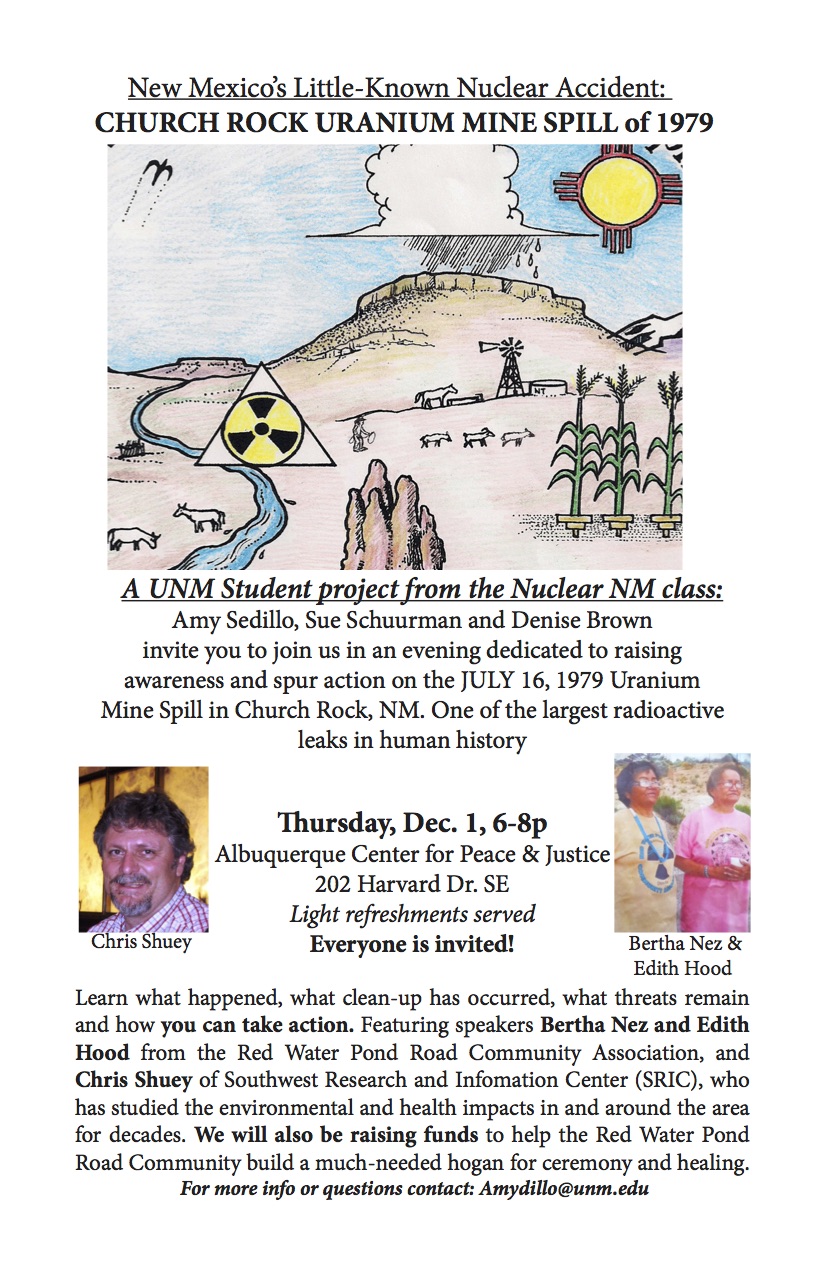
Larry King, who is Navajo, lives about five miles from the entrance to Church Rock Mine, off a gravel road just past a hand-painted “Old Church Rock Mine Road” sign. In addition to the overwhelming likelihood of uranium exposure at work in the mine, there’s a strong chance he was, and may still be, exposed at home. His house is a short distance from where, on July 16, 1979, a tailings pond dam broke, releasing 93 million gallons of radioactive water. It was, by volume, the largest single release of radioactivity in the United States.
King is a sturdy-looking 58-year-old, but he suffers from respiratory problems that leave him fatigued and short of breath when he works on his property, which includes 13 cattle. “I used to do quite a bit of work several years ago, and now I’m limited,” he says.
Five miles north of where King lives is the home of Edith Hood, also a Navajo former mine worker. She worked as a probe technician in the Kerr McGee mine for a total of six years. A quiet 64-year-old, she’s still energetic despite having been diagnosed with lymphoma in 2006. Her front yard is less than half a mile from the abandoned mine where she once worked. Just a short distance away is a buried tailings pile—mine waste that contains uranium and may still be giving off radon. “Since we live and work here,” she says, “it’s a double whammy.”
Waiting
In 2015, bills to amend RECA to include post-1971 workers were introduced in the House and Senate, spearheaded by three Democratic New Mexico legislators: Sens. Tom Udall and Martin Heinrich and Rep. Ben Ray Luján.
It’s the fourth attempt since 2000. Keith Killian, a private attorney in Grand Junction, Colo., who is fighting to get compensation for post-1971 workers, sees reason for “guarded” optimism. “There are bipartisan sponsors,” he says. “That’s really good. In the past we didn’t have a lot of Republicans interested.”
Still, no bill has received a hearing and nothing is scheduled. Neither Senate Judiciary Committee Chair Chuck Grassley (R-Iowa), ranking member Patrick Leahy (D-Vt.) nor House Judiciary Committee Chair Bob Goodlatte responded to requests for comment.
Cipriano Lucero, a soft-spoken man of few words, did what he was told when he worked in the mills. He, like many other uranium workers, said if he complained about working conditions, he risked losing his job. One of his tasks, washing uranium off air filters, required him to stand in foot-deep water containing uranium runoff. Doctors, he says, told him radiation exposure had made his left leg brittle; it broke three times and eventually had to be amputated. Now he has a prosthesis, with a painting of the Virgin of Guadalupe on it. Lucero has trouble walking and usually uses a cane or, when he gets too tired, a motorized wheelchair.
“Some days are terrible,” he says. “I can barely get out of bed. I just wonder how I’m gonna die…suffocate or whatever.” He’s only 61.
“It’s haunting us,” says Jerry Sanchez, who worked as both a miner and miller. “If you worked there, you got it coming. If you don’t have it, it’s coming.”
Grants is the quintessential boom town, post-boom. Now, the best jobs are in the prisons. Along its main street, a stretch of Route 66, there are almost as many weed-infested lots as there are occupied buildings. A half-mile stretch contains six payday loan companies—four in one block. A few large neon signs beckon people to buildings that no longer exist. An abandoned gas station has a large sign advertising Marlboro for $1.69 a pack. Lucero says that in its prime, Grants had “lots and lots of people. … The restaurants were full all the time, people [were] buying cars and houses.” But the streets are mostly deserted now. Asked if his friends and family have moved away, he answers, “No. Most of them died because of cancer.”
Joseph Sorrentino is a writer and photographer. He has been documenting the lives of agricultural workers on both sides of the U.S./Mexico border for 12 years.
Jackpile – Paguate Uranium Mine Superfund Site July 2015
Site History:
The mine was operated by Anaconda Minerals Company, a division of Atlantic Richfield Company. Mining operations were conducted from 1953 through early 1982 from three open pits, Jackpile, North Paguate, and South Paguate. Open pit mining was conducted predominately with large front-end loaders and haul trucks. The mine was closed because of depressed uranium mining conditions. During the 29 years of mining, approximately 400 million tons of rocks were moved within the mine area and approximately 25 million tons of uranium ore were transported west of the property. Mining operations were conducted from 1953 through early 1982
No Start Up Until Clean Up: Human Rights and the Impacts of Uranium Mining and Processing in the United States September 2014
Excerpt:
A. Remediation of Historic Waste
21. The United States’ and state governments’ continuing failure to commit adequate financial and other resources to remediating radioactive waste from historic uranium mining and processing represents an ongoing violation of community members’ and MASE members’ rights to life, health and access to clean water as guaranteed by the Universal Declaration of Human Rights, the International Covenant on Civil and Political Rights, the American Declaration of the Rights and Duties of Man,16 and the General Assembly’s Resolution No. 64/292 recognizing the right to water and sanitation.
22. The United States’ and state governments’ failure to remediate radioactive waste from uranium mining and processing in minority communities, while achieving remediation in non-minority communities also represents the United States’ failure to realize its obligations to provide equal treatment under domestic laws pursuant to the International Covenant on Civil and Political Rights18 and the International Convention on the Elimination on All Forms of Racial Discrimination.
23. Moreover, the Special Rapporteur on the human right to water and sanitation (then Independent Expert) submitted a report on disparate access to clean water in the United States to the UN Human Rights Council in September 2011.20 In paragraphs 30-40 of her report, the Special Rapporteur expressed her concern about the pattern of discriminatory impacts on low-income and minority populations in the United States, regarding those communities’ access to safe drinking water.