MASE

About MASE
Posts by MASE Admin:
Federal act doesn’t address RECA, but still is sending billions to NM
By Cathy Cook / Journal Staff Writer, The Alburquerque Journal | Dec 20, 2023
Chancey Bush/Journal
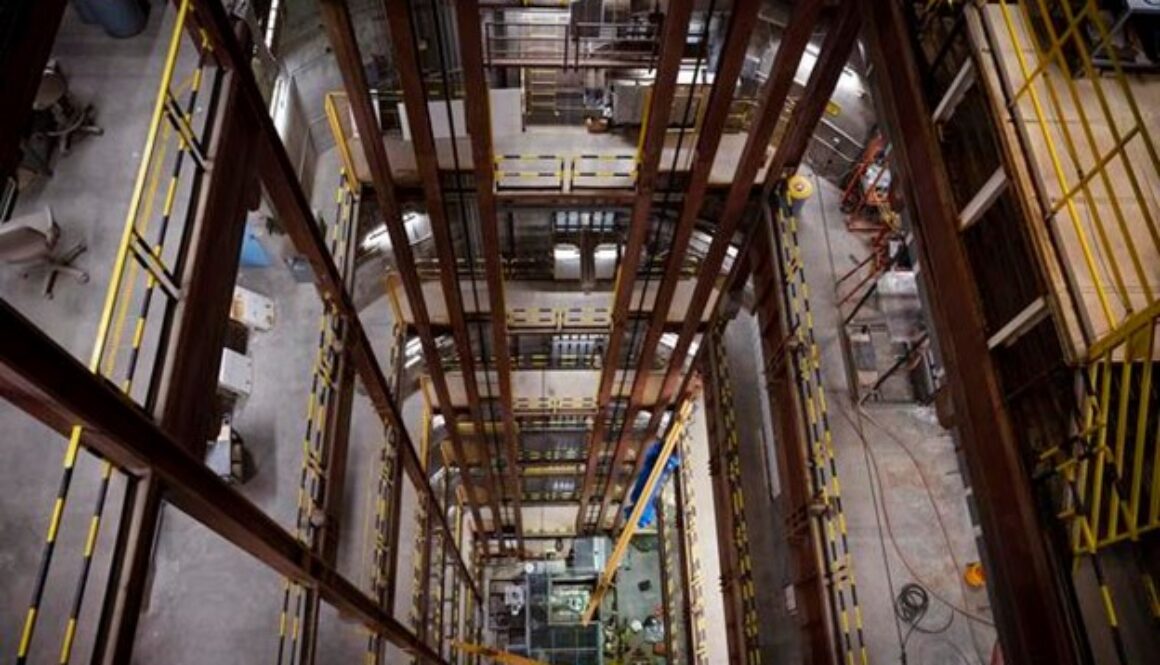
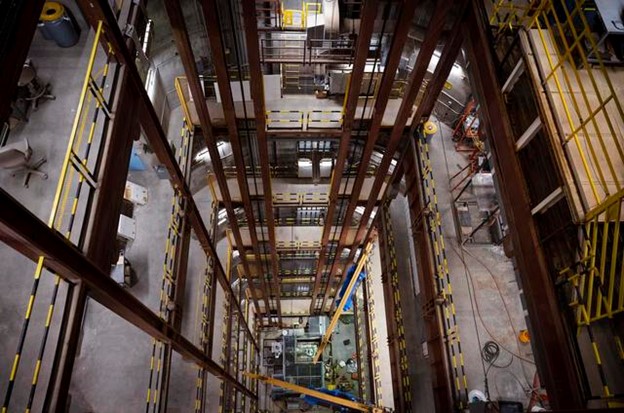
The National Defense Authorization Act passed both the House and the Senate last week and has been sent to President Joe Biden’s desk. The annual bill will authorize defense spending, including billions for national labs and millions for military institutions in New Mexico.
The bill failed to include an amendment that would have allowed New Mexicans downwind of nuclear testing to apply for compensation from the federal government for certain types of cancers through the existing Radiation Exposure Compensation Act, which is to sunset in June 2024.
Defense dollars headed to NM
The National Nuclear Security Administration is to receive $24 billion, which will include funding for Sandia National Labs. The Sandia Labs funding supports system integration, engineering and science programs. The NNSA will also get $782 million for advanced simulation and computing efforts in its Stockpile Stewardship Program, which is supposed to create realistic simulations to understand how the nuclear stockpile would behave without the need for explosive testing.
Los Alamos will get $1.79 billion for ongoing research and development. The money will help pay for personnel and equipment.
The NDAA also authorizes $276 million for environmental cleanup at Sandia and Los Alamos.
The Waste Isolation Pilot Plant in Carlsbad will get $464 million, including $44.4 million to continue building more ventilation and $50 million for work on a utility shaft.
The NDAA authorizes $20.2 million for the Readiness Environmental Protection Integration Program, which helps protect testing and training missions from environmental issues like flooding, wildfires and drought. White Sands Missile Range, Cannon Air Force Base and Melrose Air Force Base all rely on the Department of Defense program.
The legislation includes $5.5 million for White Sands Missile Range to build a lab enclosure and operations and administration building for the High Energy Laser Systems Test Facility. The New Mexico Army National Guard is to receive $11 million to build a vehicle maintenance shop in Rio Rancho, and Cannon Air Force Base was authorized $5 million for a new fire station.
Military pay raise and Santa Fe graves
The final bill supports a 5.2% pay raise for military service members and Department of Defense civilian workers, expands eligibility for the basic needs allowance, makes investments in military housing and improves FMLA eligibility for federal employees.
The legislation repeals a provision from 1999 that allowed flat gravestones at the Santa Fe National Cemetery and requires a study of the cost of replacing the existing flat markers with uprights.
The bill also requires the National Nuclear Security Administration to report to Congress on alternative transportation approaches for Los Alamos personnel.
Disappointment for Downwinders
Despite bipartisan support in the Senate, House Republicans pulled an amendment from the legislation in early December that would have made New Mexicans downwind of nuclear testing eligible for federal compensation for the first time and would have expanded eligibility to uranium miners and mine workers who were working on uranium mines after 1971.
The existing program, RECA, offers compensation for certain types of cancer after radiation exposure related to uranium mines or nuclear testing.
The move to pull the amendment from legislation got pushback from New Mexico’s congressional delegation, state Attorney General Raúl Torrez and Santa Fe Archbishop John Wester.
Sen. Ben Ray Luján, D-N.M., spoke on the Senate floor in favor of the amendment last week.
“I plead and I urge with my colleagues that we find a way to do the right thing here,” Luján said, “that going forward, we find a path to get this done.”
New Mexico’s delegation has been discussing other options for pushing a RECA extension when budget negotiations begin again in mid-January, Rep. Melanie Stansbury in a press call last week.
“If we are able to get some kind of omnibus bill pulled together, we will push very hard to get some kind of RECA extension on to those bills. Now, every time we’ve tried to pass a real budget over the last 11 months, the Freedom Caucus of the GOP has caused everything to come to a grinding halt,” Stansbury said, which could make passing a RECA extension an uphill battle.
“I supported the final version of the bipartisan bill in spite of this disgraceful omission because it secures investments in our national defense and service members — including those serving throughout New Mexico,” Rep. Teresa Leger Fernandez, D-N.M., said in a statement.
Phil Harrison, a founding member of the Navajo Uranium Radiation Victims Committee, said that groups advocating for compensation for New Mexico Downwinders and uranium miners are still working toward that goal. Members from three of those groups were to meet by Zoom Tuesday.
“We’re not giving up. We’re still going to go forward with our plans,” Harrison said. “We want our people, the radiation victims, we want them to be treated fairly.”
Harrison said that he thinks New Mexico’s congressional representatives might need to propose a stand-alone bill to push for compensation.
Congress Fails Victims of U.S. Nuclear Tests, Production
Advocates Call for Congress to Strengthen Radiation Exposure Compensation Program
Kyle Ann Sebastian, Union of Concerned Scientists | December 7, 2023
It appears that Congress has stripped a provision from the final National Defense Authorization Act (NDAA) that would have ensured victims of U.S. nuclear weapons tests, production and waste have access to health care and compensation to help cover medical debt and other expenses. Congress is expected to vote on the bill before the end of the year.
The provision, proposed by Sens. Ben Ray Luján (D-N.M.), Mike Crapo (R-Idaho) and Josh Hawley (R-Mo.), would have strengthened the Radiation Exposure Compensation Act (RECA) and given victims more time to apply for aid by extending the program, which is currently set to expire this summer. The stripped amendment would have, for the first time, extended health care benefits and compensation to communities impacted by the test of the first atomic bomb in New Mexico, as well as residents of Colorado, Idaho, Missouri, Montana and Guam. It also would have covered the areas of Nevada, Utah and Arizona not currently covered by RECA and included additional uranium workers.
“The communities poisoned by nuclear weapons testing, uranium mining and radioactive waste have been fighting for decades for recognition and justice from their government. This is a failure of justice, of government responsibility, and of empathy,” said Lilly Adams, senior outreach coordinator in the Global Security Program at the Union of Concerned Scientists. “We’re going to keep fighting for what survivors truly need and deserve: access to healthcare, restitution for their suffering, and more time to apply. I’m inspired by the impacted community members across the country who have fought tirelessly alongside and for each other. And they are ready to keep fighting for justice. Thank you to the members of Congress that have championed this issue and are continuing to fight for what is right.”
“Generations of Americans in predominantly rural, poor and tribal communities were knowingly sacrificed, made to suffer and died for the sake of our nation’s misguided policies of so-called ‘nuclear deterrence’ and ‘national security,’” said Matthew Capalby, with Downwinders of Mohave County, Arizona. “The failure of our congressional leaders to recognize this injustice is reprehensible and beneath our nation’s values.”
“People all across the American West and Guam who were horribly harmed when our country went about its reckless testing of nuclear weapons are devastated to again be left without assistance,” said Tina Cordova, founder of the Tularosa Basin Downwinders Consortium. “Certain members of Congress care nothing about the people who’ve been dying for 78 years without assistance. They see nothing wrong with looking away from our basic human right to appropriate health care. While our defense budget continues to grow unabashedly, we are left to hold bake sales, garage sales, and sell livestock to meet our growing health care expenses when we are sick and dying. Shame on them for taking this position. Make no mistake: We will not give up and we will be back to build an even greater coalition to continue this fight.”
“We are devastated that the RECA amendment wasn’t included in the NDAA. This is a grave mistake that means more Americans harmed by our government’s negligence will die without getting the life-saving support they deserve. We’re grateful to Senators Hawley, Lujan and Crapo for all they’ve done to bring our fight for justice this far and for continuing to advocate for RECA. They have fought for me and my community more than my own senators,” said Mary Dickson, a Utah downwinder and advocate. “The real tragedy? Our government has the money to invest in more nuclear weapons and expand our arsenal of weapons that can never be used, but it hasn’t the wisdom nor the will to take care of the Americans whose lives those weapons have destroyed. We will never give up until we see the justice and recognition we deserve.”
“Our nation’s leaders had the opportunity to right the massive injustice that was inflicted upon its own people,” said Sherrie Hanna, an Arizona downwinder advocate. “They failed to strengthen and continue to compensate fully the victims that were harmed due to monetary measures. What are all the victims that have suffered and died, and the many more that will suffer and die due to nuclear contamination, what are their lives worth?”
“This process has been hectic and frustrating. We have been waiting for over 70 years due to federal negligence, poisoning the Americans and Native Americans who are all suffering with various cancers – many have died,” said Phil Harrison, a founding member of the Navajo Uranium Radiation Victims Committee. “The current RECA program cost the government $2.5 billion – barely a drop in the bucket compared to billions of dollars in the defense budget. Medical benefits through RECA are imperative as many victims are on limited income. There needs to be a closure for our people who have sacrificed their lives in developing billion-dollar nuclear weapons programs.”
“We have worked so hard to achieve inclusion in RECA, for all of the communities that have been harmed by uranium production and nuclear testing,” said Dr. Kim Visintine, a founding member of the St. Louis-based group Coldwater Creek – Just the Facts Please. “I lost my 6-year-old son to cancer. He was born with a rare, radiation linked, congenital brain tumor and spent his entire childhood fighting for his life. RECA would have greatly improved the lives of my family and helped out significantly with our medical bills. RECA would have also provided opportunities for medical screening and healthcare provider education on our exposure. My hope is that other families in Missouri, and across the country, who have similarly been affected by nuclear weapons radioactive material, will be able to benefit from this program. We are the unwitting victims of United States friendly fire – we deserve to be made whole from the damage that has been unjustly bestowed upon us by our own government. It is a tragedy that our government has yet again turned its back on the people who make up this great nation, and by no fault of our own, were harmed by these deadly environmental disasters.”
Billiman raises awareness for RECA extension
By Jody Wilson, Gallup Independent | 12/6/23 Diné Bureau
GALLUP — On Saturday, Maggie Billiman and several members of her family gathered at Camille’s in Gallup to make 30-second videos in support of extending and expanding the Radiation Exposure Compensation Act. Billiman sent videos to news sources in Washington D.C. in hopes that members of Congress will see it and vote in favor of a RECA extension.
The Radiation Exposure Compensation Act is a law that was passed in 1990 to provide compensation to individuals affected by nuclear testing and uranium mining. The legislation is set to expire in July 2024.
Over the summer, the U.S. Senate passed a bill as an amendment to the National Defense Authorization Act, which is a big defense budget bill. The amendment would strengthen RECA by covering communities that were left out for many decades, it would also increase the compensation that people are eligible for. It would also extend the amount of time that people have to apply. The House passed its own version that did not include an extension of RECA.
Now, the House and the Senate are going through what’s called a conference process to try to work out the differences between their bills including RECA.
Over the past several months, Billiman has been on a mission to extend and pass RECA in the NDAA.
Billiman set up two meetings in her home community of Sawmill to raise awareness on the issue and collect signatures for petitions asking the House to expand and extend the deadline.
Billiman’s father was a Navajo Code Talker and before his death in 2001 they did not know about RECA. He asked her to research cancer treatments so that nobody else would have to endure the same hardship.
“Nobody had educated us about it. I didn’t know this was going to affect me, my whole family, my community and all the way across the reservation,” said Billiman.
‘We feel like we’re forgotten’
Her brother Daniel Billiman and sister Julia Torres are facing similar hardship.
“I’ve been dealing with the hospitals all across the reservation, Winslow, Tucson, Albuquerque – I’ve been there. They never told me what the cause of it was. I still carry that problem that I have with my health,” said Daniel. “It brings tears in my eyes when I see the elders suffer even now the younger ages are going through a lot like my own sisters, I see them in pain. All this radiation exposure is really hurting the people and community, we feel like we’re forgotten.”
Along with advocating in her community, Billiman has also reached out to elected leaders and others for help including Lilly Adams who is the Senior Outreach Coordinator for the Union of Concerned Scientists.
“Unfortunately, I talked to so many people who have similar stories to Maggie, where so many people in their families and communities have been exposed and have gotten cancer or passed away from cancer and are also experiencing those health issues themselves,” said Adams. “We’ve been working very hard to try to maintain RECA throughout this process to make sure that is in the fi nal defense budget bill that passes.”
“I think this is important because the U.S. government essentially poisoned its own people through the process of above-ground weapons testing and uranium mining and production. People are now suffering from cancer and other illnesses and government has a responsibility to help those people,” said Adams.
Billiman has also reached out to Senate Minority Leader Mitch McConnell and House Speaker Mike Johnson. She and Adams also had a meeting with Congressman Eli Crane’s Offi ce, which yielded good results.
“Congressman Crane ended up writing a letter of support of RECA, to be kept in the NDAA, which was really powerful, and we’ve heard this has been really infl uential as well,” said Adams. Adams urges anyone who thinks they might be affected to learn more about the program because there are resources to help. For others interested in helping to expand the program, she said the best thing to do is to contact their member of Congress.
Billiman said despite her health issues, she is going to continue to advocate for RECA.
“I really wanted to be a voice for the Navajo people and I know that a lot of them don’t quite understand a lot of things,” said Billiman. “I really do hope that they extend RECA because besides the money, we need better healthcare. I’m going to fight until my last breath.”
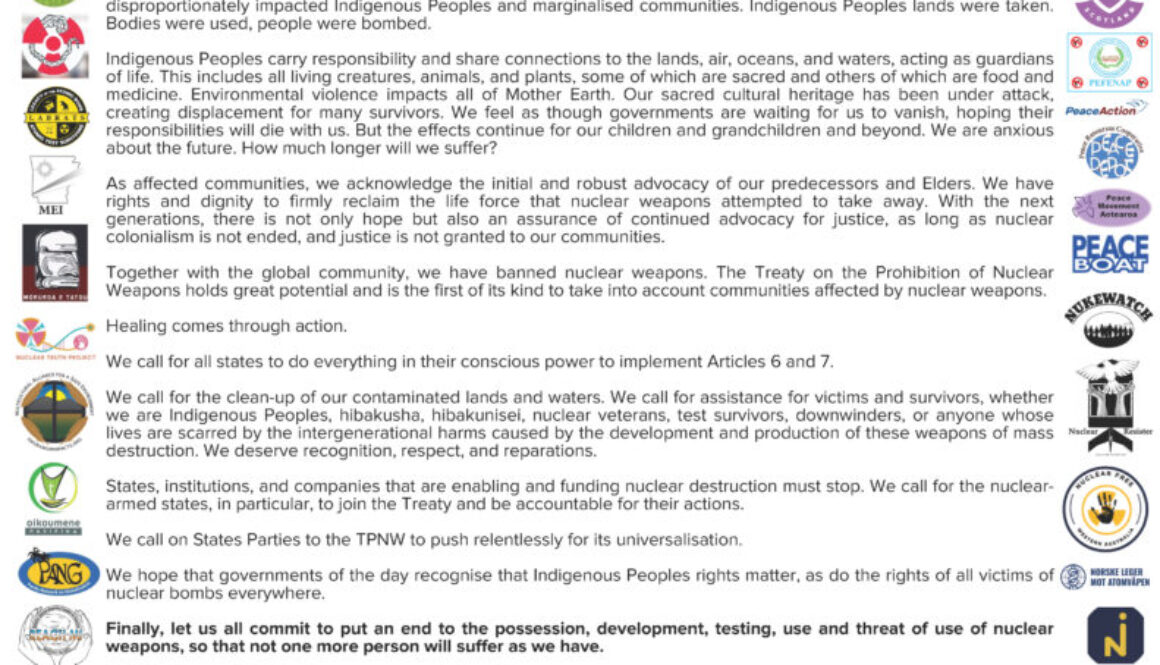
Affected Communities Statement
To the Second Meeting of States Parties to the UN Treaty on the Prohibition of Nuclear Weapons, 2023
Tribal Leaders Speak out at White Mesa Spiritual Walk
ORIGINAL ARTICLE: GRAND CANYON TRUST | URANIUM BLOG on October 17 2023
by Tim Peterson, Cultural Landscapes Director
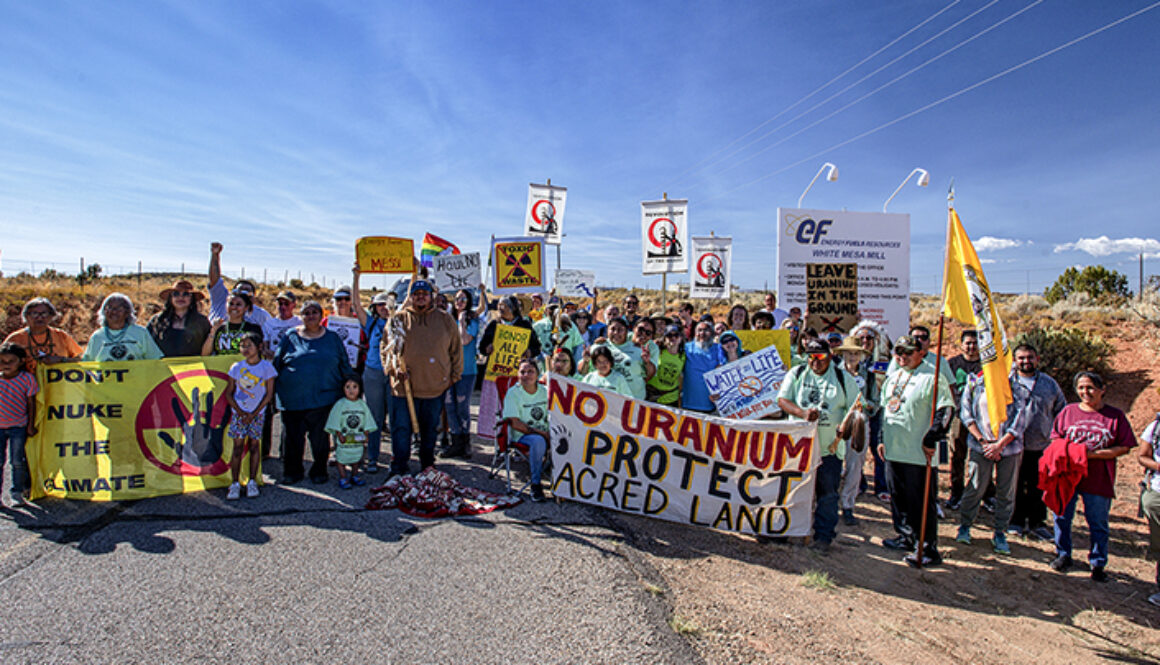
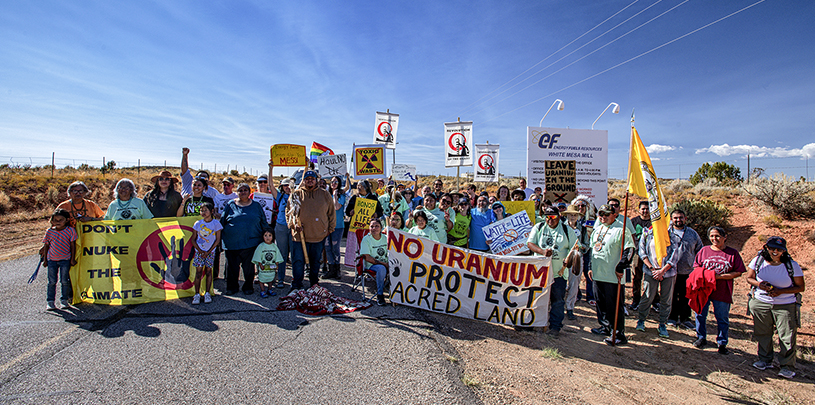
The day before the second anniversary of Bears Ears National Monument’s restoration and two days before Indigenous Peoples’ Day, on a warm and clear Saturday, tribal members from many Indigenous communities and their allies and supporters gathered for the annual White Mesa spiritual walk and protest on October 7, 2023.
The walk, sponsored by the Ute Mountain Ute Tribe and the White Mesa Concerned Community group, travels from the community to the gates of the White Mesa uranium mill in southeast Utah.
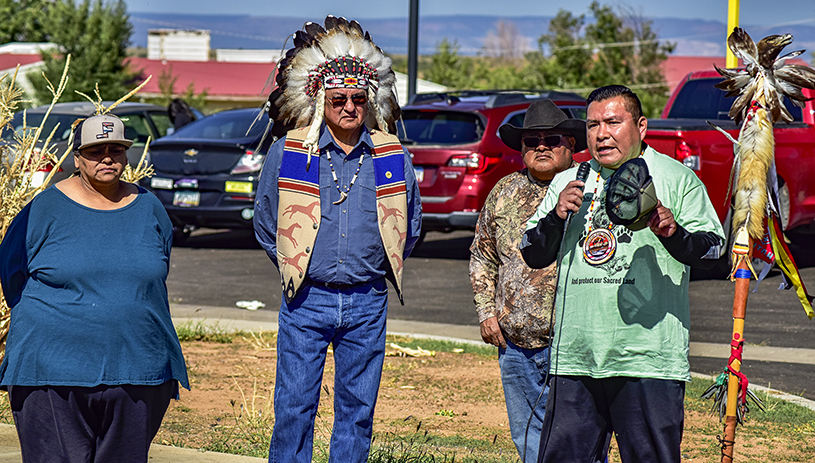
“This mill isn’t just our problem. It’s everybody’s problem…it’s going to affect us, all of us, in the long run. We should have thousands of people upset about this,” said Ute Mountain Ute Tribal Councilman Conrad Jacket.
Health concerns loom in shadow of uranium mill near Bears Ears
Located just one mile east of Bears Ears National Monument and a few miles from the Ute Mountain Ute Tribe’s White Mesa community, the White Mesa Mill is the United States’ last operating conventional uranium mill. It was licensed in 1980 to process uranium ore from around the Four Corners region. Back then, it was projected to operate for around 15 years, then close and clean up. Now, more than 40 years later, the mill is still operating, and community members are concerned for the fate of their land, air, and especially their water.
“This is a big thing for us and we don’t want them to expand, because we can smell … that sulfur smell…when we go by, you can smell it. It’s not a good smell. And a lot of our people got sick and we don’t know if it’s due to that,” said White Mesa Concerned Community member Michael Badback.
How has the mill stayed open so long? According to an executive at Energy Fuels Resources, the company that owns the mill, the “White Mesa [Mill] barely makes money. It’s always at risk of permanent closure.” Instead of closing when milling local uranium ore was no longer profitable, past and present owners of the mill have continuously reinvented their business model to keep operating.
The mill turns to radioactive waste
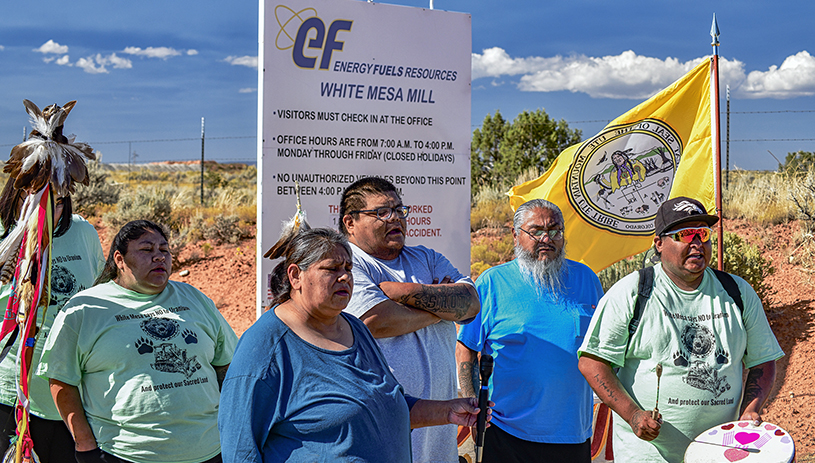
First, the White Mesa Mill began accepting radioactive waste from around the country and the world, often to pocket hefty disposal fees on the order of $5 to $15 million per year, according to Energy Fuels’ CEO.
Since the late 1980s, more than 700 million pounds of radioactive waste have been processed and dumped at the mill. The mill’s owners call this waste “alternate feed.”
“The state of Utah does not give a care. This is the place where they want to dump their waste. And not only the waste in America… waste…from Japan, from Europe,” explained Councilman Jacket.
The mill retools again
Now, the mill’s owner is making a play to enter the rare earth elements processing market. Since 2021, the mill has been producing a mixed rare earth carbonate that has to be shipped all the way to Estonia to be further refined. But they’re making plans, buying equipment, and retooling the mill.
So far, Utah regulators have done nothing to involve the public in another transformation that could keep an old uranium mill open even longer.
Lives are more important than money
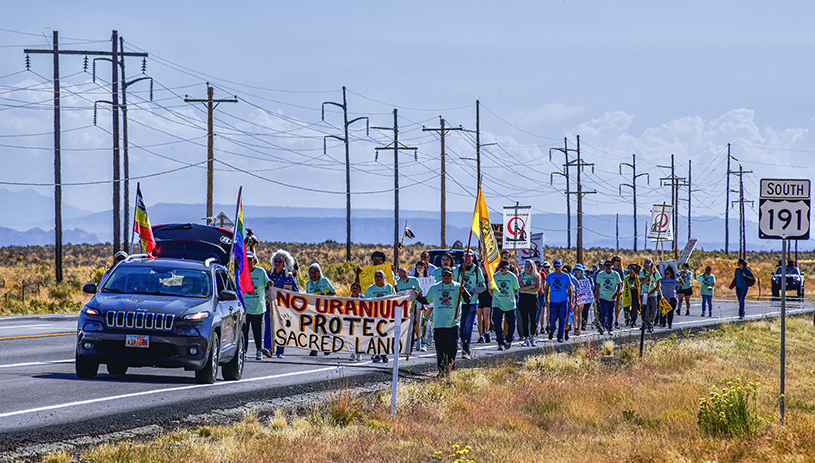
At the community center, White Mesa Concerned Community leader Yolanda Badback welcomed those who came to walk. Councilman Jacket and Chairman Heart offered remarks, and Ute Mountain Ute Councilman and White Mesa Representative Malcolm Lehi spoke to the crowd in the Ute language.
“…the Ute Mountain Ute tribal government is in full support of protecting the community of White Mesa,” Chairman Heart told the crowd. “We’re facing health disparities in Indian Country, huge health disparities, not only diabetes, but cancer. And if this water is affecting this community of White Mesa, then it is a big concern. [Mill owner] Energy Fuels is looking at it from a profit margin, and so is Utah. I do not think money should be put before the lives of tribal members,” Heart continued. “Even if this community is a small community, it has to have [the] same equity of healthcare and healthcare services and take care of and protect the Utah citizens, as White Mesa community [members] are Utah citizens.”
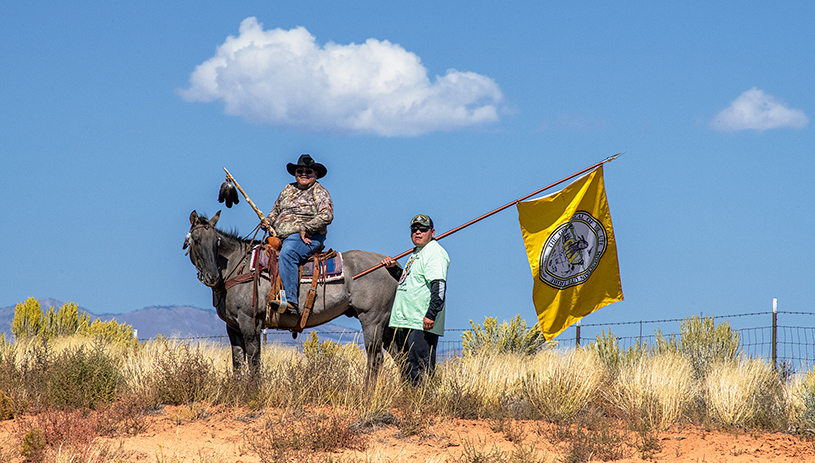
After the five-mile spiritual walk, near the gates of the mill, Chairman Heart addressed the crowd again.
“Yes, things take time,” Heart acknowledged. “It doesn’t happen overnight, doesn’t happen over a month, a year, it takes time…It takes time to educate people, people from the … Environmental Protection Agency, from the Nuclear Regulatory Commission, to hold this mill accountable. It’s not just about money, it’s about the lives, each one of the lives that crossed this road and traveled this road. And this mill here is not in the best interest of this community, and they need to move it, close it, put it someplace else where it has no effect to life, water, or the environment. That’s what we ask.”
As uranium prices climb and a long-dormant domestic uranium industry threatens to start up again, the White Mesa Mill and the White Mesa Ute community are at the center of an epic struggle for environmental justice.
In the words of Chairman Heart: “We want to have healthy lives. We want to have access to clean water. We want to have resources for the future of our children and grandchildren that are not here yet.”
Act now. Urge decision-makers to protect the Bears Ears cultural landscape from radioactive waste.
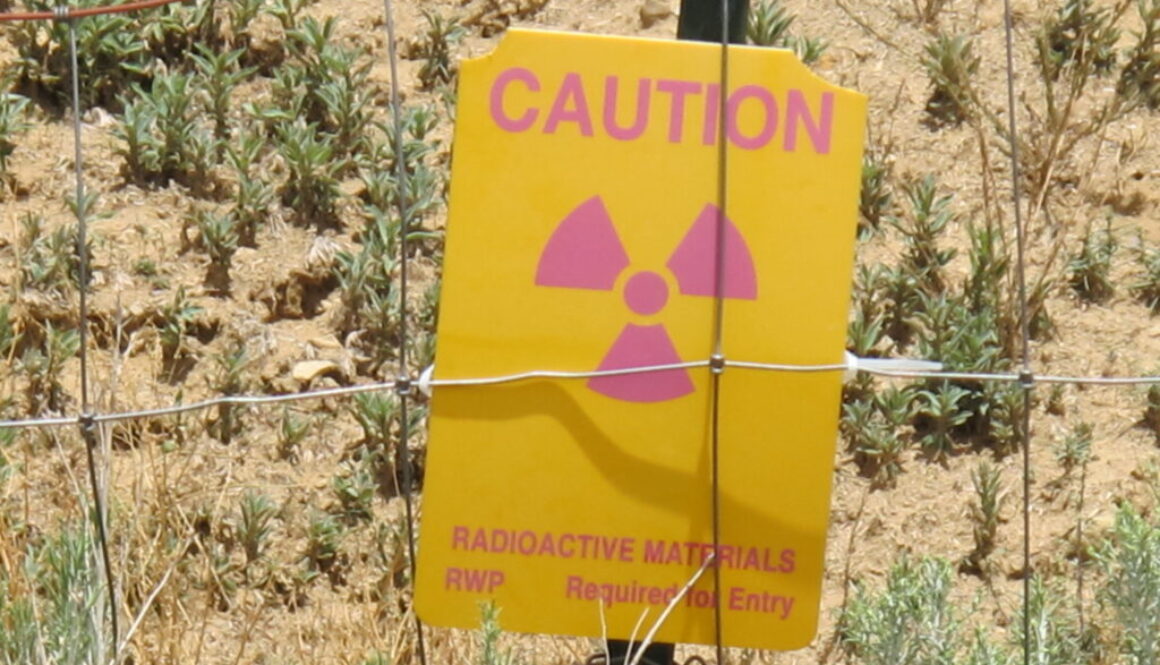
Nearly 40 years later, one of Colorado’s longest-running Superfund sites still has no radioactive waste cleanup plan
by Elise Schmelzer, The Denver Post | October 26, 2023 denverpost.com
Nearly 40 years later, one of Colorado’s longest-running Superfund sites still has no radioactive waste cleanup plan
Jeri Fry was six years old when she toured the uranium mill outside town where her dad worked.
It’s the smell she remembers best, more than 60 years later: a deep sulfur odor that permeated the mill and sometimes wafted downwind to the neighborhood where she grew up, two miles away.
“I remember my dad saying to not play in the water when we watered the lawn,” Fry said.
Her father, the mill’s lead chemist, was a whistleblower who alerted authorities to the health consequences of processing the radioactive element. Now 68, Fry has been deeply enmeshed in the decades-long effort in Cañon City to clean up the mill site and the surrounding areas it contaminated.
She cofounded a local group, Colorado Citizens Against Toxic Waste, to educate people, while she and other community members have spent thousands of hours reading planning documents and attending meetings.
But nearly 40 years after federal regulators designated the mill and surrounding areas a Superfund site and mandated its cleanup, the radioactive waste remains. There still is no plan for how to deal with the millions of tons of radioactive material sitting just south of Cañon City, a city of 17,000 located about 35 miles southwest of Colorado Springs.
The dedicated group of community members that’s been pushing the site owners and government agencies to make progress is increasingly frustrated at the slow pace of change—especially after the company that took on the cleanup responsibilities ran out of money this year, delaying the already drawn-out process once again.
“We the community have been calling ‘fire’ and nobody has come running,” Fry said. “The citizens have had to hold the feet to the fire—always, always, always.”
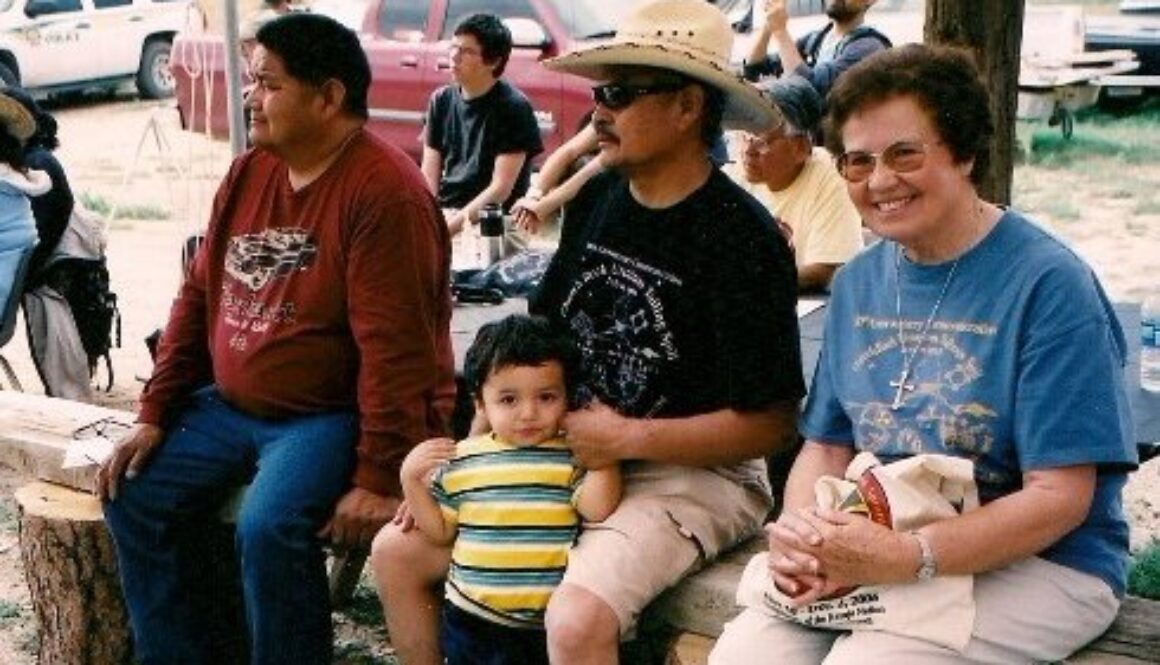
Maryknoll nun helps New Mexico’s tribal peoples deal with uranium legacy
BY: MARK PATTISON
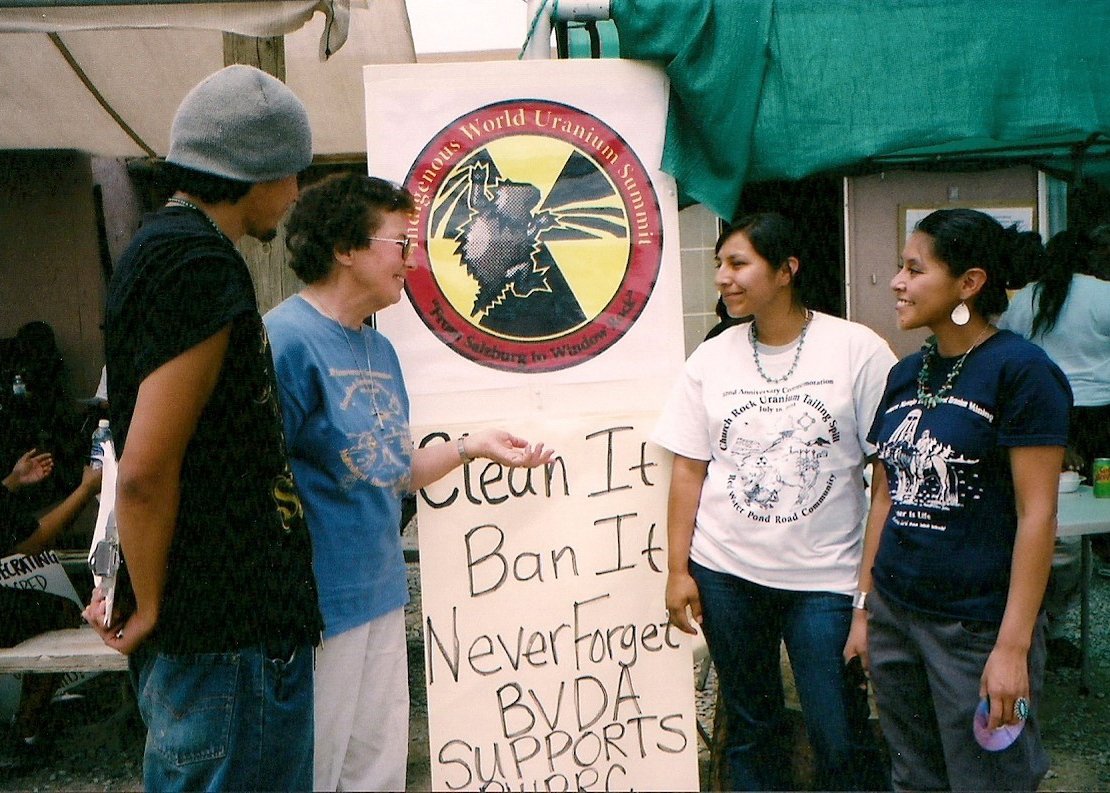
When she was assigned to New Mexico 26 years ago after spending 33 years ministering in Asia, Maryknoll Sr. Rose Marie Cecchini never expected to spend so much of her ministry — and for such a lengthy period — helping the state’s tribal peoples deal with the literal fallout of uranium mining.
But she was trained to listen. And when she got to the Land of Enchantment, she got an earful.
“When I came in to the diocese, I came with this realization that I had to learn so much, just as I had to learn about the peoples of Asia,” Cecchini said.
Beginning her work in the Office of Peace, Justice and Creation with Catholic Charities for the Diocese of Gallup, whose 55,000 square miles includes portions of Arizona, she held listening sessions. “It took three years to complete this,” she said.
That’s how Cecchini learned of the legacy of uranium mining in New Mexico.
“Uranium [mining] took off during the 1940s and ’50s, developing in the atomic bomb and the Cold War scenarios,” Cecchini told Catholic News Service in a Sept. 21 phone interview from Gallup. “New Mexico was the source for the half of the uranium.”
She said there was “irresponsible mining and milling, hundreds of mines with no remediation and cleaning, continuing to contaminate the soil, the air and the water. … The radiation-related diseases and the cancer — all of this came into my consciousness.”
Cecchini found a connection with her ministry in Asia.
“In Japan, I was very aware of the church’s response to A-bomb survivors. I was seeing this underside of the whole of the whole nuclear cycle,” she said. “That’s what brought me into relationships with Indigenous, environmental groups and organizations, and at the same time, similar-purpose groups, other Christian groups and organizations, being more aware of all these contemporary issues that we deal with.”
Cecchini works with New Mexico Interfaith Power and Light, whose executive director is Franciscan Sr. Joan Brown.
“This afternoon, for example, I will have a conversation with Gallup Solar, started 14 years ago,” she added. “We’re very concerned about the environmental challenges. About the fossil fuel industry and the nuclear industry assaulting the earth and its resources.”
She outlined examples of both the bad and the good.
The bad: “We have the largest methane gas cloud hovering over the Four Corners,” Cecchini said. “That is due to the oil and gas drilling and the lack of oversight of the release of methane that’s contributing to the climate crisis.”
The good: “New Mexico is one of the ideal locations — the second most ideal location in the U.S. — for solar energy. We wanted to focus especially on the realization that many of the Navajo — something like 14,000 households — have no access to electricity. They are miles from the nearest power line, and it costs $1,000 a mile to get a power line to your home.”
Slowly but surely, Cecchini and her many allies are chipping away at the lack of access to electrical power which hundreds of millions of Americans take for granted.
“We have a training program for the fifth year where we train 10 Native American men and women in the basics of solar energy. We have a 12-volt, 200-watt system,” she told CNS. “They are taught all the components and the power potentiality and safety measures and so forth.”
But during the pandemic, “we could not meet in person,” she noted.
The 10 candidates chosen for the program each year “receive an iPad with all the lessons, basics in solar energy,” she said. “Every two weeks we have this phone conference call with the students to address their questions.”
“When they finish the curriculum sessions that they have one-on-one, they learn to wire the components together and they take the [solar] unit. And they identify whether they themselves will receive the system if they have no electricity or if they have a relative or friend who lives on the reservation and they will install it at their home,” Cecchini continued.
A solar tech oversees the candidate who is completing the program by installing the unit on a particular home in Navajo land, she said.
“They’re required to take photos and videos on what was installed and what was the experience like and how the family responds to it, and what appliances they have now that they didn’t have before.”
Cecchini says the Native people call it “energy sovereignty.”
Now 88, Cecchini said she thinks about her Maryknoll orientation “from the beginning.”
“I think it’s the willingness to go beyond borders, to have that heart of love, because we’re energized by God’s love which is flowing out through all creation and all people,” she said.
“By transversing the generated divisions and the racial boundaries, somehow, all that needs to be our terrain of mission. It keeps all of that as common to our vocation.”
Cecchini added, “When I came in ’96, there were about five Maryknoll sisters, so I’m the last of the Mohicans. But it’s been a glorious and wonderful gift. I can never thank God enough.”
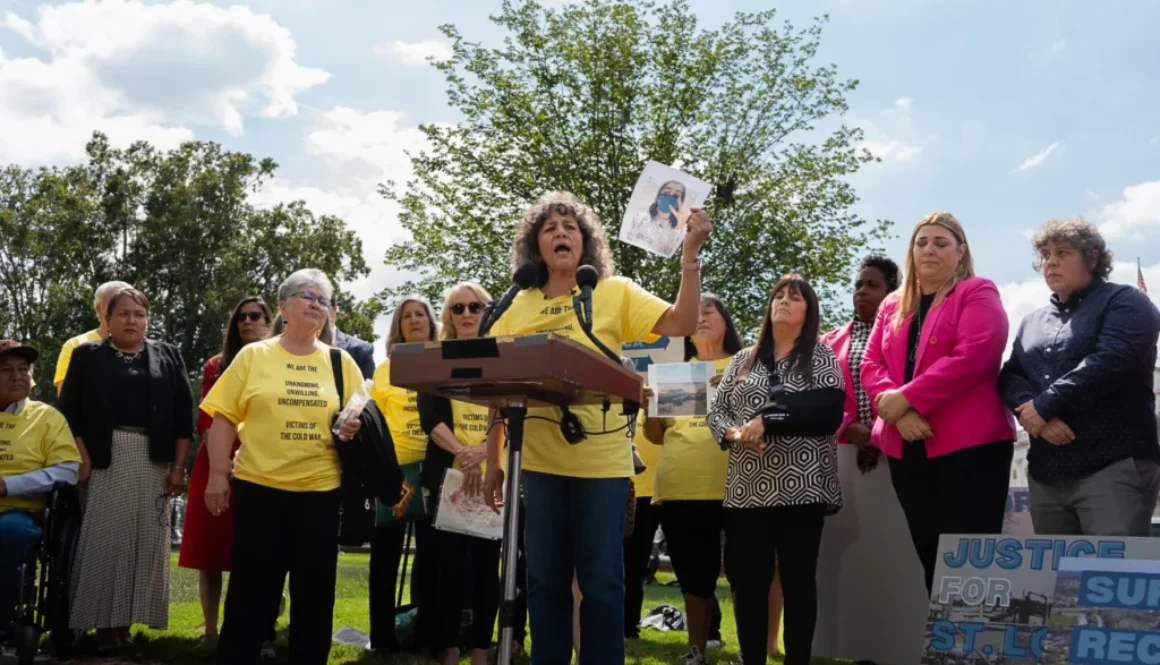
Lawmakers, community members say RECA expansion is needed to help the ‘unknowing, unwilling, uncompensated victims of the Cold War’
“You talk about the American dream, our people that engage in mining of uranium did not reach that American dream,” – Phil Harrison, a former miner and a member of the Navajo Uranium Radiation Victims Committee

As the years have passed and people have died of cancer, Navajo Nation communities impacted by uranium mining have lost hope that they will someday receive compensation for the medical conditions resulting from exposure to radioactivity, Phil Harrison said during a press conference on Wednesday.
“We are here in Washington to tell America how freedom was established,” Harrison, a former miner and a member of the Navajo Uranium Radiation Victims Committee, said.
People like Harrison who were exposed to radiation as a result of uranium mining as well as the downwinders who were exposed to radiation after the Trinity nuclear detonation in areas like New Mexico’s Tularosa Basin are closer to receiving compensation than ever before after the U.S. Senate approved an expansion to the Radiation Exposure Compensation Act earlier this year as an amendment to the National Defense Authorization Act.
Now members of the U.S. House of Representatives including Teresa Leger Fernández, a Democrat from New Mexico and James Moylan, a Republican non-voting member who represents Guam, are pushing to have that body of Congress approve the expansion.
U.S. Senators Ben Ray Luján, D-New Mexico, and Josh Hawley, R-Missouri, hosted a press conference on Wednesday and were joined by their colleagues Leger Fernández, Moylan and Sen. Eric Schmitt, R-Missouri, as well as various people from communities impacted by the radiation exposure.
Many of the people who attended, including Harrison, wore yellow shirts that read: “We are the unknowing, unwilling, uncompensated victims of the Cold War.”
‘We’re dealing with death’
Harrison said the miners were largely uneducated and couldn’t read and write.
“You talk about the American dream, our people that engage in mining of uranium did not reach that American dream,” he said.
His father, who worked in the mines, died at age 43 of lung cancer and now Harrison has kidney problems because of the exposure to radioactive material. Hundreds of Navajo people who worked in the mines have died due to that exposure.
“People die very quietly,” Harrison said.
In the last two months, he has facilitated three funerals from deaths that were related to cancer and lung disease.
“The Navajo uranium miners, all those other miners, the Laguna miners, they provided that recipe for the bomb,” Harrison said.
When his kidneys failed, Harrison initially thought he had been bitten by mosquitos. A rash formed on his body and the doctors put him on dialysis. Looking back, he recalls drinking water in the uranium mine.
“Nobody told me ‘don’t drink that. Don’t wade in there,’” he said.
He said the mine companies “never gave anything that would be sustainable. We’re dealing with death.”
Navajo Nation Speaker Crystalyne Curley spoke about the debt that the country owes to the Navajo people. She said that debt occurred over decades with the uranium mining on Navajo Nation that has been “paid in the currency of their health and environment and, in some cases, their lives.”
Between 1944 and 1986, companies extracted nearly 300 million tons of uranium from Navajo Nation lands. This provided opportunities for Navajo people to build a better life for themselves and their families, but it also came at a cost, Curley said. She said her people were not aware of the dangers that uranium mining posed due to a lack of communication. Curley said the uranium mining has resulted in “generations of illnesses and death across Navajo Nation.”
Navajo community members herded livestock to drink contaminated waters, which children also played in. She said they also took lumber and supplies available from the mines to construct their houses.
Now they are paying the cost in medical conditions such as cancer and kidney disease.
‘The government ought to pay the bills’
After learning about the radioactive waste that was disposed of in Missouri and uranium processing that occurred in the St. Louis area that continues to impact people’s health, Hawley called Luján—who has been a long-time champion of expanding RECA—and the two of them worked together in a bipartisan effort to get 61 votes in the Senate.
“We are here to demand justice for the men and women across this country, from St. Louis, Missouri to St. Charles, Missouri to New Mexico and Utah and Guam and every place in between, who have been exposed by their government to radioactive waste radioactive material, and have not been compensated for it,” Hawley said. “Listen, this is a basic principle, if a government is going to create a disaster, the government should clean it up. If the government is going to expose its own citizens to radioactive material, radioactive waste, radioactive contamination for decades, the government ought to pay the bills of the men and women who have gotten sick because of it, they ought to pay for the survivor benefits of those who have been lost.”
In Missouri, radioactive waste led to the closure of Jana Elementary School and a community member who attended the press conference held a sign that read “Justice for Jana Elementary.”
Since the closure, more than 300 dump truck loads of contaminated dirt have been removed from the banks of Coldwater Creek near the school and the community has called for broader levels of testing.
This story is not unique and Hawley said he was able to secure the votes of his Republican colleagues by telling them about ways the expansion could benefit their own constituents.
“Every member of Congress should vote for this,” Hawley said, stating that all 50 states have people who have been impacted by radiation exposure.
In his own state, Hawley pointed to the high levels of childhood brain tumors in St. Louis as a result of the uranium processing.
“Now, we’ve been told for decades that that was just a coincidence. But we know now that’s not true,” he said, adding that federal officials knew that the water and soil in St. Louis had nuclear contamination starting as early as the 1950s and 1960s.
‘This is our history’
Luján spoke about the conditions that uranium miners faced as the mines were often filled with water to keep particulate matter down and the workers would leave with radioactive material on their clothing, which they would bring home to their families.
“Not only were those uranium mine workers getting sick, but then it was spreading to families and countless others,” he said.
The vast majority of the defense-related uranium mining—96 percent—occurred on Navajo Nation lands. Other uranium mining related to defense activities occurred on Pueblo of Laguna and Pueblo of Zuni lands in New Mexico.
He also spoke about downwinders in the Tularosa Basin who have not been compensated for the health impacts atomic weapon testing had on their families. That includes people like Tina Cordova who is the fourth generation in her family to develop cancer as a result of the testing and now has a niece who is fifth generation to develop cancer.
“There are generations behind us whose genes carry this legacy,” she said.
Cordova said there was no running water in her community at the time, so people collected rainwater for drinking, cooking and bathing.
“They didn’t have the decency to let us know that as that ash fell from the sky for days afterwards that it would completely contaminate our water supply,” she said.
There were also no grocery stores, so many people grew their own food, which was also contaminated by the fallout.
“This is our history. This is the legacy of the nuclear development and testing that took place in our country during the Cold War and before,” she said. “And it is time for justice.”
Both Luján and Leger Fernández spoke about the recent film Oppenheimer which documented the work to develop the atomic bomb.
“In New Mexico, the bomb was invented, the bomb was exploded, and the material for the bomb was mined,” Leger Fernández said.
She said the film left out a line that has been included in other documentation, including writings about the Manhattan Project.
“Those who are in charge of considering what the nuclear waste, what the fallout would do to New Mexicans, said, ‘Well, we’re pretty sure there was overexposure. But they can’t prove it. We can’t prove it. So I think we got away with it.’ We are not going to let them get away with it,” she said.
She said the government eventually chose to move that testing to another place in the country that “the United States thought was uninhabited” and then later to Guam and other Pacific Islands.
She said the people participating in the press conference were not making a statement about the value of the work to develop nuclear weapons. Instead, she said the statement they are making is that it is important to compensate those who were harmed in that process.
“It was a marvelous thing they did in 1992, where they recognized that the downwinders, the miners, the workers deserve the kind of specialized health care that they need to address the harm that is done when you are exposed to these materials,” she said, referencing the initial passage of the Radiation Exposure Compensation Act. “What was wrong back then was to inadvertently leave out the communities that are represented here behind me from that compensation.”
The original law did not include downwinders in New Mexico or Guam, nor did it include miners who worked in uranium mines after 1971.
“Justice is not complete until it is justice for all. And that is what we are asking for: justice for everybody who was hurt,” she said.
Leger Fernández said expanding the Radiation Exposure Compensation Act is about saving lives. She said it will allow people who were exposed to radiation to receive testing for various cancers.
“If we could actually get out to all of the miners who mined after 1971 and make sure that they get the health screening—do you have any of these cancers that can be caused from this mining—we could save their lives,” she said.
Inter-American Commission on Human Rights (IACHR) Makes Historic Promotional Visit to Churchrock & Crownpoint
Commissioners See First-Hand Impacts from Uranium Mining & Milling to Pueblo and Diné Communities
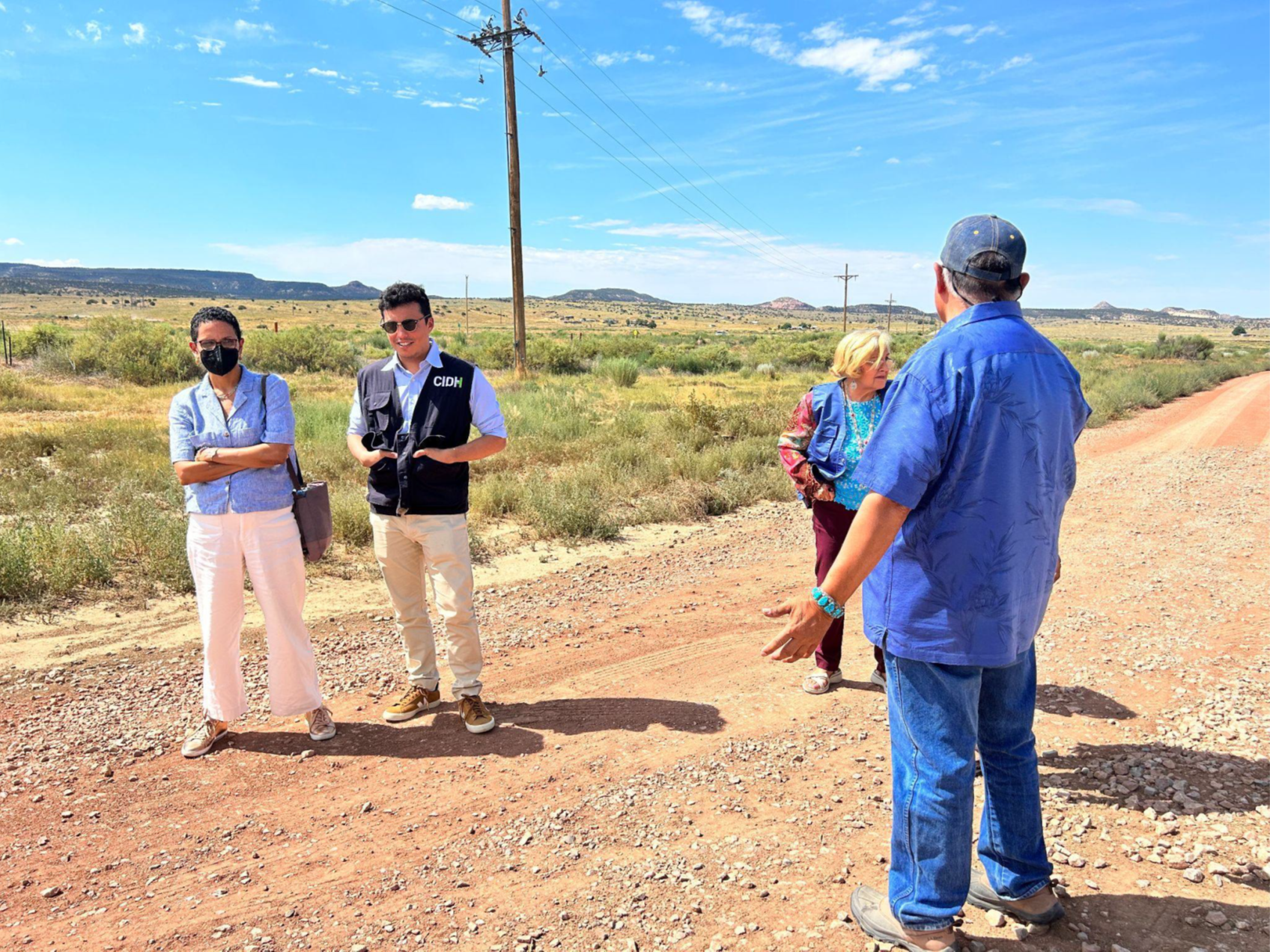
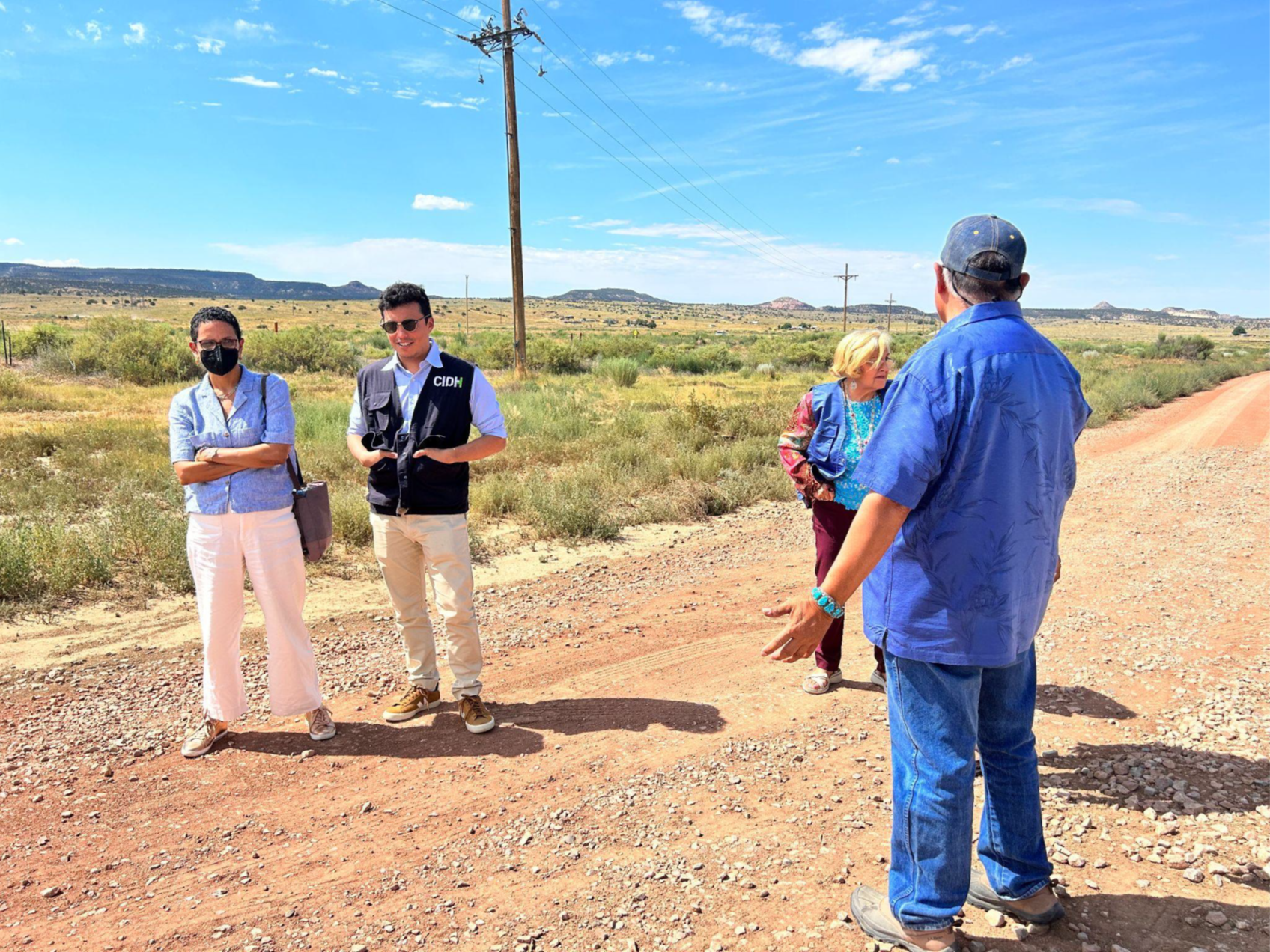
Churchrock, NM—Eastern Navajo Diné Against Uranium Mining (ENDAUM) and Red Water Pond Road Community Association, with support from NMELC, Multicultural Alliance for a Safe Environment (MASE) and Southwest Research & Information Center (SRIC), hosted a four-person delegation from the Inter-American Commission on Human Rights (IACHR) during the last week of July at the Pueblo of Laguna, Churchrock and Crownpoint chapters of the Navajo Nation, and in Gallup, New Mexico.
The purpose of this unprecedented and historic “promotional visit” was for the Commissioners to see first hand the impacts uranium mining and milling have had on Indigenous communities in New Mexico and to provide information and education on the IACHR’s mission on behalf of 35 nations of the Western Hemisphere. IACHR is the adjudicatory arm of the Organization of American States.
IACHR Commissioner Roberta Clarke and Commissioner Esmeralda Arosemena de Troitiño and two IACHR Human Rights Specialists, Santiago Martinez and Laura Morelo, took a two-day tour through Laguna, Churchrock and Crownpoint to see the harmful impacts from uranium mining and milling. The tour was led by Chris Shuey from SRIC, along with Larry King, Jonathan Perry, Christine Smith, Edith Hood, Teracita Keyanna, June Lorenzo, Christine Lowry, Rita Capitan, and Eric Jantz. Spanish language translation to the Spanish-speaking IACHR commissioner was provided by Sylvia Ledesma.
The two-day tour included stops at the closed Jackpile Mine next to the Village of Paguate on the Pueblo of Laguna; the Homestake uranium tailings pile north of Milan, N; the site of the July 16, 1979 uranium mill tailings spill 10 miles north of Churchrock village; the Northeast Church Rock Mine (formerly operated by United Nuclear Corporation and now owned by General Electric Co.); the Quivira Churchrock I Mine site, and the Crownpoint Uranium Project processing plant in Crownpoint. (No uranium is being processed at this plant.)
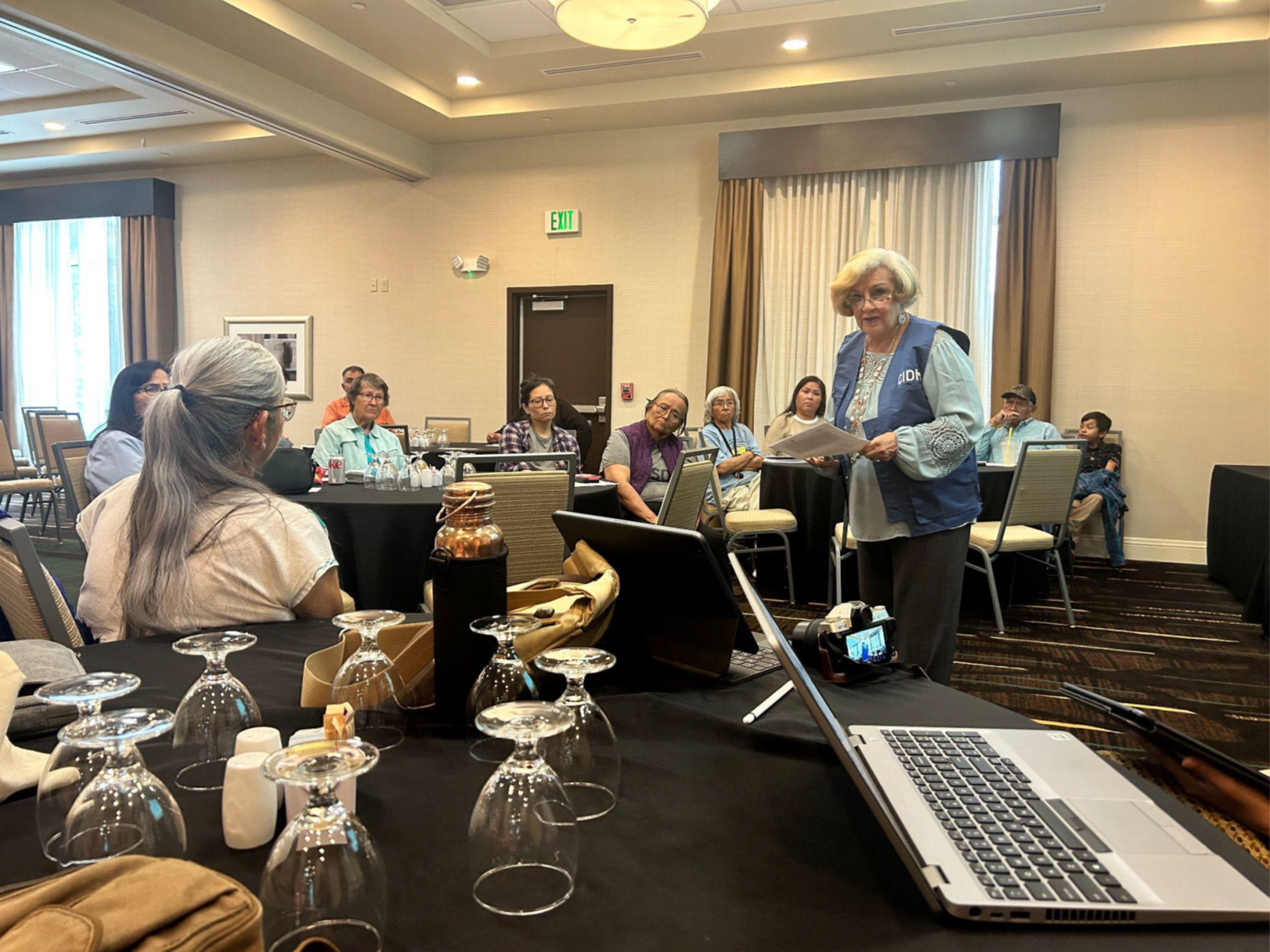
The delegation also enjoyed a meal with a family in Seama, one of the six main villages of the Pueblo of Laguna, and watched traditional dances at the Seama Feast Day. The IACHR officials heard testimonials from Diné community members about the trauma of living for more than 50 years sandwiched among three uranium sites at a potluck gathering at the Red Water Pond shade house. The tour wrapped up in Gallup with a presentation by IACHR Commissioners Clarke and de Troitiño on “Inter-American Standards on Racial Discrimination and Indigenous Peoples Rights.” Please contact NMELC if you would like to receive a copy of the IACHR slideshow. The training was followed by a reception emceed by Jonathan Perry.
“It was clear the visit had a tremendous impact on the Commissioners,” said NMELC Senior Staff Attorney Eric Jantz. “They were able to see and better understand the toxic legacy of uranium mining our clients and communities have been dealing with for decades; how challenging the struggle is to protect clean water from uranium companies and weak regulatory agencies; and they saw the resilience and tenacity of the communities fighting for their right to enjoy a healthy life for their families, something every human being is entitled to. At some of the stops, uranium readings were twice as high as background, which understandably alarmed the Commissioners.”
After the promotional visit, on August 11, ENDAUM and NMELC submitted another request for a Thematic Hearing on impacts from uranium mining and milling on Indigenous peoples for the next IACHR 188th Period of Sessions, which will be held in Washington, D.C., October 30 through November 10, 2023.
Jonathan Perry, Director, ENDAUM, said, “Having the IACHR commissioners and staff come to our Diné communities for their promotional visit was crucial to their understanding the lasting impacts of the uranium mining legacy and to comprehend the complexity of our lands within Eastern Navajo Agency of the Navajo Nation. We intended to educate the IACHR delegation on how our communities are still in the midst of contamination that needs to be addressed while our efforts to prevent further threats from new proposed uranium extraction projects continue simultaneously.”
Edith Hood, Red Water Pond Road Community, said, “I am thankful to the IACHR Commissioners and staff for coming to see and hear us in Gallup, and also, better yet coming to the Red Water Pond Road community and seeing for themselves what we talk about. We urge our local tribal, state and federal leaders to do the same.”
Chris Shuey, MPH, SRIC, said, “The Commissioners got to see with their own eyes the close proximity of uranium mine wastes to Native homes and fields, and to listen to the stories of community members about health problems that date back three to four generations. They also learned how community members from Laguna to Churchrock and beyond are advocating for inclusion of Post-1971 uranium workers in expansion of the federal Radiation Exposure Compensation Act. They were particularly moved by June Lorenzo’s talk on how the Federal Government forced uranium development on Pueblo and Navajo people without their free, prior and informed consent in the 1950s and ‘60s.”
Eric Jantz, Senior Staff Attorney, NMELC, said, “The Commissioners’ historic promotional visit to Laguna and the Navajo Nation was an important opportunity for the Commissioners and their staff to see firsthand the effects of the United States’ uranium development and cleanup policies on frontline communities. It was also an opportunity for community members to learn about the Inter-American human rights framework and how they can use it to hold governments accountable.”
Dr. Virginia Necochea, Executive Director, NMELC, said: “We are grateful to the IACHR for prioritizing this promotional visit to uranium-impacted communities and for taking the concerns of our clients and community members seriously. NMELC remains committed to working alongside our clients and the larger community in demanding appropriate clean up, in seeking remediation efforts, and in continuing to protect clean and limited water resources.”